This article will introduce five tips for beginners looking to propagate succulents from cuttings. We'll explain the basic knowledge in an easy-to-understand way, from techniques for increasing propagation success rates to the optimal timing and methods for taking cuttings.
1. Introduction: The Appeal of Succulent Cuttings
Anyone can easily get started with succulent cuttings once they understand their appeal. The greatest charm is the ability to grow new succulents from a single plant you already have. This is a great joy for those who love houseplants. Another appeal of cuttings is that it can dispel the image many beginners likely have that it seems difficult. If you learn the proper method and put it into practice, cuttings can surprisingly succeed easily. And as you gradually understand the secrets of succulent growth through this process, your bond with succulents will deepen even further. Such experiences will maximize the appeal of propagating succulents from cuttings.
(1) Easily multiply plants at home
"Succulent cuttings" are one of the easiest ways to multiply plants at home. You can start without special tools or fertilizers, just a pot, some soil, and a part of the mother plant.
First, cut an appropriate part from the mother plant. The appropriate part depends on the plant species, but generally, healthy leaves or stems are chosen. There are two patterns for when to plant the cut part, depending on the person.
① Dry the cut part in the shade for a few days, then plant it in soil after the cut surface has dried.
② Plant the cut part directly into the soil immediately after cutting.
Recently, many people seem to be using method ② for cuttings, but you can choose whichever method works best for you.
After planting in the soil, simply provide adequate watering and sunlight. It's surprisingly simple that new succulent plants can be grown this way!


(2) Understanding the key points for success will help you grasp growth.
To successfully propagate succulents from cuttings, it's important to keep a few key points in mind. First, careful attention is needed for the optimal cutting method. This means cutting without damaging the stems or leaves, and choosing the freshest possible parts to cut.
Care after taking cuttings is also crucial. Once healthy new shoots appear, expose them to adequate sunlight to aid their growth. By following these points, you will grasp the knack for succulent growth.
2. Tips for Successful Succulent Cuttings
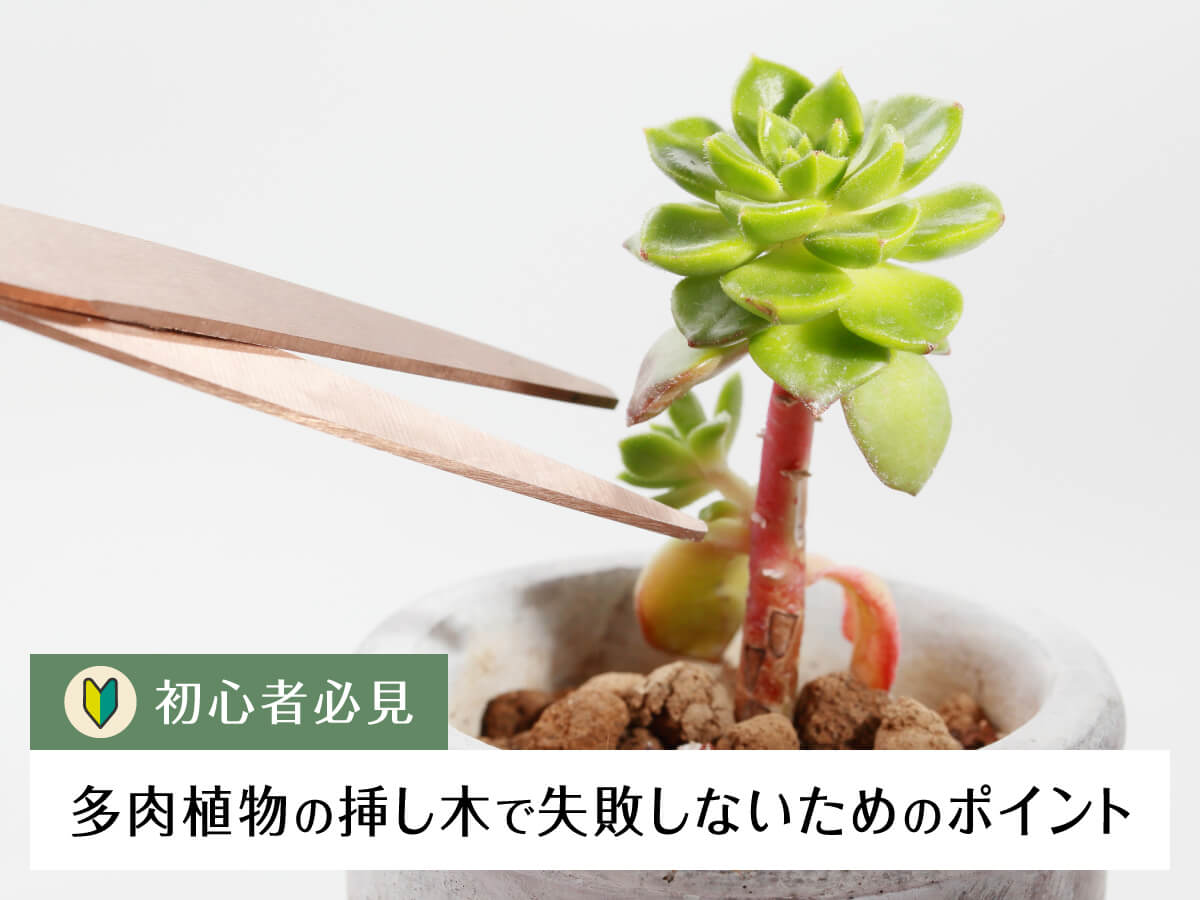
To successfully propagate succulents from cuttings, the appropriate cutting method is crucial. First, choose the part to cut. The best parts are those with new shoots or healthy parts that are not discolored. Next, use clean scissors or a knife to make the cut. If leaves are dense and difficult to cut, remove the leaves around the cutting area first; this makes cutting easier and the removed leaves can also be used for leaf propagation.
When cutting stem-forming seedlings, remove the lower leaves for 1-2 centimeters to make planting easier. Additionally, when cutting a stemless seedling like an Echeveria (also known as beheading), removing the leaves from the cut, damaged base, which can cause rot, increases the chances of successful propagation from cuttings. These are the proper cutting methods for succulents.
(1) Proper cutting method
First, let's talk about the "proper cutting method." While division and cuttings are common ways to propagate succulents, proper cutting is essential for either method. For cuttings, if the seedling has a stem, cut it while maintaining a certain length that includes the part to be inserted into the soil.
When cutting a sufficiently long seedling, such as a Crassula, you can further divide the cut seedling into two or three pieces and plant them in the soil.
Also, if you cut the top of a stemmed seedling, and only the stem remains with all the leaves removed, new leaves or shoots may emerge from the stem if you observe it. Don't immediately discard the original plant that has become just a stem; try to keep it watered appropriately and observe its progress.
There is one precaution after cutting. The cut surface of the remaining original plant will expose leaves that were not previously exposed to the sun. Exposing them to direct sunlight immediately after cutting can cause sunburn, so place them in a bright shaded area immediately after cutting, and then gradually move them to a sunnier spot as they get accustomed to the sunlight.
Furthermore, "care methods after rooting" are also important. After rooting, it's crucial to provide sufficient moisture and sunlight. However, be careful not to overdo either.
These are the tips for successfully propagating succulents from cuttings. If you attempt cuttings while keeping these in mind, you are sure to succeed.


(2) How to prepare seedlings
First, start by preparing the cut succulent seedling. This requires removing two or three leaves from the bottom of the seedling. If these leaves are buried in the soil, they can rot, and that rot can even affect the stem.

(3) Aftercare for cuttings
After inserting the cut part into the soil, water it. It's fine to water generously until it overflows from the bottom of the pot. After watering, place it in a well-ventilated area and let the soil dry thoroughly before the next watering.
Also, for placement, monitor its growth in bright shade or in direct sunlight, except during summer.
Following these steps, your succulent cuttings will surely grow into new life.

3. How to Propagate Various Succulents from Cuttings
The types of succulents that can be propagated from cuttings vary. For example, "Crassula" is characterized by its crisscrossing leaves when viewed from above, and it is cold-hardy and easy to grow. "Sedum" has roundish leaves that show beautiful autumn foliage. It has a mysterious nature where new life can emerge even from a leaf that has fallen off. And "Rhipsalis" is a type without leaves, with drooping branches. It's a rare forest-dwelling cactus that readily develops aerial roots and prefers humidity. These succulents can be propagated from cuttings.
The specific method of propagation basically involves cutting at an appropriate position, drying the cutting, and then encouraging rooting. After rooting, plant it in a pot and provide appropriate care for the new plant to grow.
(1) Types that can be propagated from cuttings
Let's introduce some succulent varieties that can be easily propagated from cuttings.
"Crassula" is a variety that can be easily propagated from cuttings. Varieties like "Hana Matsuri" (Campfire Crassula) and "Komeboshi" (Crassula 'Baby's Necklace') are particularly beautiful and popular.
Furthermore, "Sedum" is also suitable for propagation from cuttings. Varieties with round leaves, such as "Niji no Tama" (Sedum rubrotinctum 'Aurora') and "Otome-Gokoro" (Sedum pachyphyllum 'Jelly Bean'), can be multiplied into many plants by cutting for propagation. By removing the lower leaves from the cut part for planting in soil, the removed leaves can be used for leaf propagation, and new shoots will emerge from the original plant after the tip is cut. Therefore, cuttings are recommended for those who want to multiply their plants.
Finally, "Rhipsalis" is a unique forest-dwelling species that prefers humidity and can also be grown from cuttings. Multiply these varieties from cuttings and enjoy the charm of succulents even more.

(2) Which method, leaf cutting or stem cutting, is suitable for which type?
The suitability of leaf cutting versus stem cutting varies depending on the type of succulent. For example, leaf cutting is suitable for varieties with round leaves such as Echeveria and Graptopetalum. These grow new plants from leaves, allowing you to create new plants from a single leaf.
On the other hand, stem cutting is suitable for varieties with thick stems and dense leaves, such as Crassula and Sedum. These are more likely to produce new shoots from the stem, so simply cutting the stem and inserting it into the soil has a high chance of growing a new plant.
Here's a summary of specific examples:
|
Type |
Method |
|---|---|
|
Echeveria |
Leaf cutting |
|
Graptopetalum |
Leaf cutting |
|
Crassula |
Stem cutting |
|
Sedum |
Stem cutting |
Enjoy propagating succulents while keeping these points in mind.
(3) Types that readily produce pups from cuttings
Some succulent species readily produce pups from cuttings, while others do not. Species that readily produce pups include Sedum 'Hachiyo' and Aeonium 'Kurohoushi'. 'Hachiyo' in particular is easy to propagate from cuttings, with new pups emerging quickly after cutting. This characteristic makes it a recommended succulent for beginners. 'Kurohoushi' can also be propagated using the same method.
By understanding the characteristics of each and selecting the appropriate cutting method, you can enjoy growing succulents even more.

(4) Types that take time to develop plants
There are also succulent varieties that take time to develop plants. While rooting and growing take time, they can produce large plants. For example, varieties like Euphorbia take longer to grow from cuttings than typical succulents. However, once rooted, their care is similar to other succulents.
There are multiple methods for taking cuttings, but the optimal method varies depending on the species, so be sure to research which method is best before proceeding. And above all, growing from cuttings requires time and care.
4. Conclusion: Enjoy Succulents Through Cuttings
Through this article, you've learned the basic techniques of succulent propagation from cuttings and important considerations. From proper cutting methods to subsequent growth care, once you've mastered these, you can grow beautiful succulents at home. We also discussed that there are various types of succulents. Understanding the characteristics of each and choosing the appropriate cutting method is key to success.
Now, why not enjoy watching your own propagated succulents grow? Whether you're a first-timer or looking to build on past experience, I hope this article has been helpful. Please do experience the joy of multiplying succulents from cuttings.