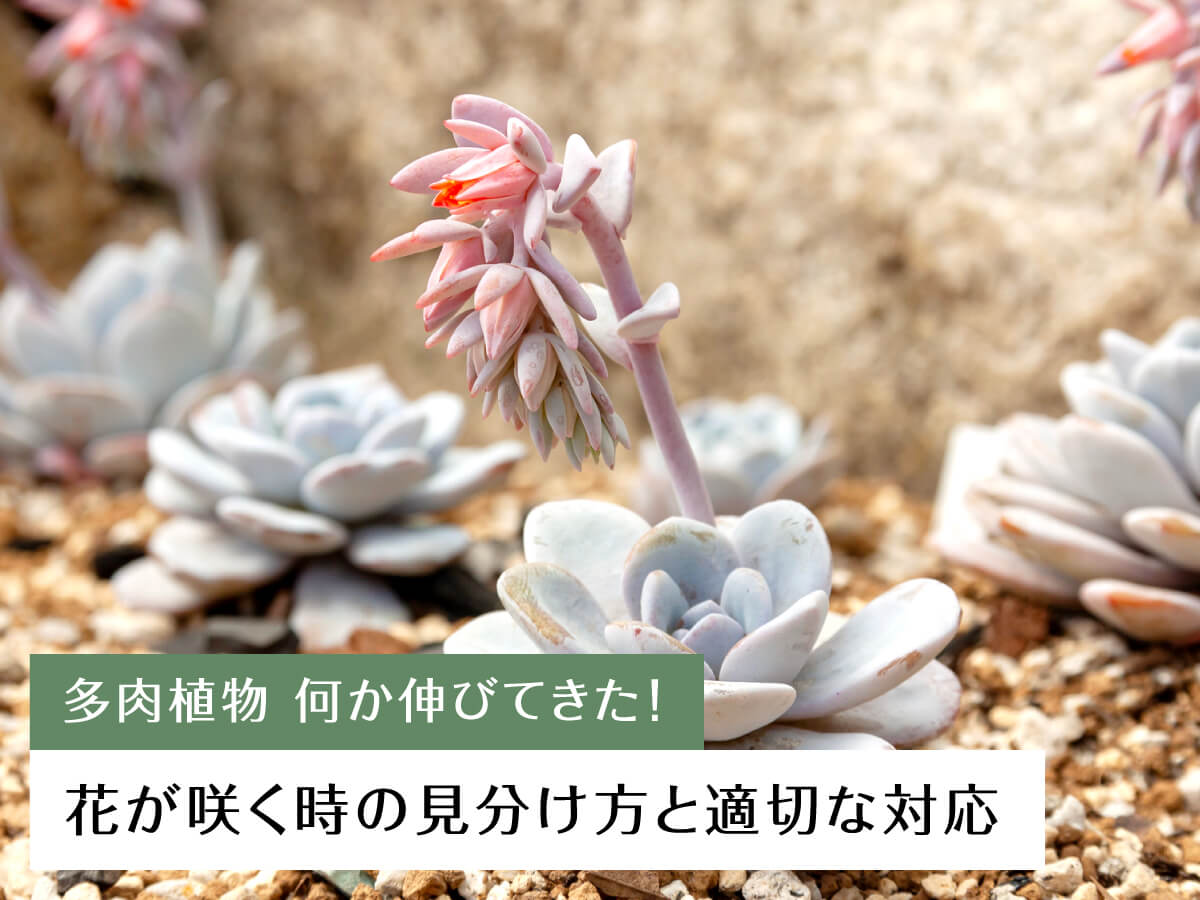
This article introduces the appeal and recommended varieties of succulents that turn pink, as well as basic care methods for growing such varieties beautifully and techniques to make them even more attractive.
1. Introduction
Succulents are popular plants with a wide range of enthusiasts due to their appealing shapes and colors. Varieties that turn pink, in particular, have many fans because of their cuteness. But why do succulents change color?
There are two main reasons why succulents change color.
First, it is due to the influence of sunlight hours and temperature. The coloring of succulents is related to photosynthesis. Succulents produce chlorophyll (green pigment) when exposed to sufficient sunlight, but when sunlight is strong, they also produce anthocyanin (red-purple pigment) to protect against sun damage. This is what causes the color change.
Second, it is a stress response. In harsh environmental conditions for plants, such as drought, low temperatures, or high temperatures, anthocyanin is more likely to be produced. Succulents are plants that have evolved to survive in harsh environments, and they may change color when under stress. This is thought to be a reaction to protect their cells.
In this way, succulents change into various colors depending on sunlight, temperature, and environmental conditions. Pink coloration, in particular, is popular for its beauty. This article will provide a detailed introduction to pink-blushing succulent varieties and how to care for them.
2. The Charm of Pink-Blushing Succulents
Pink-blushing succulents are particularly appealing due to their color changes. From their usual green, they can turn a pale pink depending on how they are grown, offering visual enjoyment. Furthermore, their color changes with the seasons, allowing one to feel the passage of time firsthand.
Moreover, there are many varieties of pink-blushing succulents, each with different characteristics, making it enjoyable to collect and compare them. For example, 'Silhouette' is characterized by its pale pink color, while 'Violet Queen' (Sumire Botan) is attractive for its purplish-pink hue.
Thus, pink-blushing succulents offer various ways to enjoy them, not just for their beautiful colors but also for the diversity of their types.

(1) Enjoying the change in colors
The appeal of succulents lies not only in their diverse shapes and sizes but also in their vibrant color changes. Varieties that turn pink, in particular, are attracting attention for their beauty. Since their colors change with the seasons, climate, and even care environment, you can enjoy their shifting hues throughout the year.
For example, 'Aurora' (Sedum rubrotinctum) maintains its green color until summer, then blushes a vibrant pink in autumn. 'Himatsuri' (Crassula capitella 'Campfire') was named for its reddish blush in autumn. These succulents offer the joy of appreciating their unique color changes throughout the four seasons.
To enjoy the color changes of these plants, proper care is essential. The specific care methods will be explained in detail in the next section.
(2) Enjoying seasonal changes
Pink-blushing succulents offer the opportunity to fully enjoy their beautiful color changes with each season. For example, the Echeveria 'Pink Crystal' variety displays a beautiful pink blush particularly in winter.
Specifically, while the leaves are predominantly green from spring to summer, in winter, due to the cold and decreased daylight hours, their leaf color transforms into a vibrant pink. Furthermore, the degree of blushing can vary depending on the environment, allowing you to enjoy your own unique pink blush.
Thus, succulents whose colors change with the seasons provide year-round enjoyment for observation. On the other hand, proper seasonal care is required, so learn more about how to grow them and strive to ensure your succulents can achieve their best coloration.

(3) Characteristics of various varieties
Each blushing succulent variety has different characteristics. Among the pink-blushing varieties are Sedum such as Sedum makinoi and Sedum rubrotinctum 'Aurora'.
Sedum makinoi is a succulent native to Japan, and its leaves turn red or yellow when exposed to cold, depending on the variety. It is also very cold-hardy, so it can be safely grown even in regions with harsh winters.
On the other hand, 'Aurora' is green until mid-summer but blushes a vivid pink in autumn. Thus, its colors change with the seasons, allowing you to feel the passage of time just by looking at it.
These varieties each have their own personality, and the joy of growing them also varies. All varieties require adequate sunlight and cold temperatures to blush, and by providing these conditions, you can enjoy beautiful pink coloration.
3. Recommended Pink-Blushing Succulent Varieties and Characteristics
As for succulents that blush pink, first, let's introduce Echeveria 'Flora'. This plant transforms into a beautiful pink color with cold, giving a flamboyant impression as its name suggests. Next, Echeveria 'Violet Queen' (Sumire Botan) is also a notable variety, with its green leaves gradually turning pink in spring and developing a deep pink blush in autumn. Echeveria 'Mebina' (Woman's Doll) is an attractive variety whose leaf tips turn pink, with the color intensifying in winter. Additionally, Echeveria 'Takahashi no Okina' (Takasago no Okina) is a large succulent whose leaves blush from pink to reddish-purple with seasonal changes, allowing you to enjoy its visual transformation. Echeveria 'Momotaro' (Peach Boy) is green from spring to summer but blushes pink in autumn, offering an enjoyable color change.
(1) Flora
'Flora' is a type of succulent that, as its name suggests, offers flamboyant coloration. Its beauty, especially when it turns pink, is captivating, and its appearance resembles a flower. The deep pink "claws" (leaf tips) and the vibrant, almost neon pink gradation are truly worth seeing.
Flora thrives in direct sunlight and maintains its beautiful pink color when kept dry. While it is cold-tolerant, care should be taken when temperatures drop below freezing. It also serves an ornamental role in gardens, whether in pots or mixed arrangements.
With its flamboyant name and lovely blushing color, Flora's beautiful pink hues are highly popular among succulent enthusiasts.

(2) Violet Queen (Sumire Botan)
Violet Queen (Sumire Botan) is one of the succulents known for its beautiful pink coloration, as its name suggests. This Echeveria variety is characterized by tightly packed small leaves, which can resemble violet flowers from certain angles.
The pink blush subtly changes hue depending on light exposure and season. From spring to early summer, you can enjoy a pale pink, while from autumn to winter, a deeper pink. These characteristics make Violet Queen a succulent that offers seasonal charm and is worth appreciating throughout the year.
Furthermore, Violet Queen grows slowly and requires minimal care, which is another of its appeals. With proper watering and light management, you can enjoy its beautiful pink blush for a long time.

(3) Mebina (Woman's Doll)
Mebina (Woman's Doll) is a recommended variety even for succulent beginners due to its beauty and hardiness. This variety, whose name evokes femininity, is characterized by its pale pink blush and its tendency to form clumps.
It is relatively strong against both cold and heat, and its leaf tips blush a pale pink, allowing you to enjoy seasonal changes. Moreover, it produces many offsets and tends to grow in clumps, so you can fully enjoy the process of its growth and the pleasure of propagation.
Furthermore, propagation by leaf cuttings has a high success rate, making it easy for beginners to multiply. With its hardiness, beauty, and ease of propagation, it adds the element of "easy to multiply" to its "cute, beautiful, and sturdy" triple threat, making it a truly perfect succulent.

(4) Tinkerbell
Tinkerbell is a succulent that blushes a beautiful pink in winter. It is small and slow-growing, so you can enjoy it for a long time with minimal effort. Its beautiful coloration is brought out by the cold.
This plant remains green until early summer, then gradually changes to pink in winter. The color intensifies, especially on particularly cold days. Its vivid pink color can be enjoyed in combination with other succulents or as part of your interior decor.
Tinkerbell is recommended even for beginners due to its beautiful coloration and easy care. Why not enjoy a world of pink at home this winter?

(5) Aurora
Aurora (Sedum rubrotinctum) is a type of succulent that, as its name suggests, boasts beautiful rainbow-like colors. It is characterized by its pinkish coloration, which deepens further when grown in a sunny spot.
Aurora is a small succulent, growing to about 5-10 cm in diameter. This small size is its charm, making it suitable for both pots and small mixed arrangements.
Caring for Aurora is relatively easy; it prefers sunny, well-draining locations. However, it is vulnerable to frost in winter, so in areas where frost occurs, it needs to be overwintered indoors.
With its vivid pink coloration that develops as it grows, Aurora is a variety that even succulent beginners can easily handle.
(6) Hime Shurei (Princess Sadness)
"Hime Shurei" (Princess Sadness) is a succulent known for its pink blush, as its name suggests. Its appearance exudes a beauty reminiscent of cherry blossom petals, captivating all who see it.
First, let's talk about the main characteristics of this plant. Hime Shurei blushes pink with cold, and its color becomes a beautiful pink, like a deep frost. This color change is very distinctive compared to other succulents, making it a striking presence.
Hime Shurei requires careful management of sunlight, temperature, and moisture. Plenty of sunlight is ideal, and temperatures should be kept above 5 degrees Celsius even in winter. Also, it's important to water thoroughly when the soil dries out.
By following these care instructions, Hime Shurei will blush a beautiful pink, maximizing its splendor. Its captivating coloration enthralls many people, including succulent collectors.
(7) Sakura Fubuki (Cherry Blossom Blizzard)
Sakura Fubuki is a succulent that blushes a deep pink, making it particularly popular for its beauty. Especially in winter, its leaves compact tightly and the color intensifies.
Here's how to care for it:
-
Watering: Water when the soil is dry, being careful not to overwater.
-
Flowering: It blooms once a day from May to June. You can see deep pink flowers for a few hours in the afternoon sun.
-
Seedlings: After flowering, it produces seeds, from which new seedlings can be grown.
Sakura Fubuki is native to South Africa, so it can grow healthily by avoiding Japan's cold and prolonged rain. Its lovely pink leaves create a miniature cherry blossom blizzard.
(8) Bronze Hime (Princess Bronze)
"Bronze Hime" is a particularly attractive variety among pink-blushing succulents. As its name suggests, it is widely loved for its leaves that change from a beautiful bronze to pink. Its ease of care is also one of its charms, as even beginners can grow it well in a sunny location.
It is possible to enjoy even more intense blushing in winter, and this color change provides visual enjoyment. Additionally, its rugged shape is distinctive and suitable for mixed arrangements.
Thus, "Bronze Hime" has become an indispensable presence for many succulent enthusiasts due to its beauty and ease of cultivation. Please consider adding it to your gardening life.
(9) Desert Rose (Kalanchoe thyrsiflora)
Desert Rose, a Kalanchoe variety, is an attractive succulent known for its large leaves that blush pink. Native to South Africa, it thrives in Japan during the warm seasons from spring to autumn.
The main characteristic of this plant is that its leaf color changes according to the amount of sunlight it receives. By exposing it to adequate sunlight, its color transforms from green to a deep pink. Therefore, you can enjoy various shades by adjusting the light exposure.
Furthermore, Desert Rose is hardy and easy to grow. However, it is sensitive to cold in winter, so it's important to protect it from frost and direct sunlight.
Thus, Desert Rose is a succulent appealing not only for its beautiful pink blush but also for its ease of cultivation. Why not try growing one?

(10) Little Missy
Crassula 'Little Missy' is a succulent whose leaf edges turn a beautiful pink during coloration, and while its individual leaves are very small, it boasts vibrant colors. This plant is a trailing succulent that has white and green leaves in summer. The cold temperatures of winter cause its leaf edges to blush charmingly, as if outlined with pink thread.
To care for Little Missy, the basic principles are similar to other succulents: use well-draining soil and ensure it receives plenty of sunlight while avoiding direct scorching sun in mid-summer. To enhance its coloration, it's crucial for it to receive ample sunlight. Ensure adequate dryness and daylight hours, and be careful to avoid high temperatures and humidity in summer.
To fully enjoy the beautiful coloration of Little Missy, it's important to master its care and manage it in an appropriate environment.
4. How to Grow Pink-Blushing Succulents
There are several key points to successfully growing pink-blushing succulents.
(1) Appropriate Watering: First, appropriate watering is important. Succulents are drought-tolerant, but they will be less likely to blush if they lack water. Also, giving too much water at once can cause root rot, so be sure to water only when the soil is thoroughly dry.
(2) Sunlight Conditions and Temperature Management: Sunlight is essential for succulents to blush. Pink-blushing varieties, in particular, require a lot of sunlight. High temperatures in summer and low temperatures in winter also affect blushing. Ensure proper temperature management.
(3) Fertilizing: Fertilize during the growing seasons of spring and autumn. Generally, liquid fertilizer is used, about once a month. However, if fertilizer components remain until winter, blushing will be less likely, so caution is needed. Also, succulents can survive without fertilizer, so if you want to enjoy more intense blushing, it might be better to avoid using fertilizer.
(4) Winter Care: During winter, growth slows down, so reduce watering. Also, be careful of frost and freezing, and take measures to protect against cold.
(1) Appropriate Watering
To enjoy the blushing of succulents, appropriate watering is essential. Particularly for inducing pink blushing, careful watering during the dry season from summer to autumn is required.
Succulents are vulnerable to overwatering, which can lead to root rot. Therefore, it is recommended to water only when the soil has completely dried out. The frequency and amount of watering may also vary depending on the specific succulent species that exhibit blushing.
【Watering Tips】
1. Water only when the soil is completely dry.
2. Pay special attention to the dry season from summer to autumn if you want to promote blushing.
3. Adjust watering frequency and amount according to the succulent species being cultivated.
Keep these watering practices in mind to achieve beautiful pink blushing.
(2) Sunlight Conditions and Temperature Management
When growing succulents that turn pink, sunlight exposure and temperature management are extremely important. Succulents develop their beautiful pink coloration when they receive sufficient sunlight. Succulents begin to turn color when the daily temperature difference is 10°C or more. However, it is important to avoid sudden temperature changes and gradually acclimate them to the cold starting in autumn.
In addition, the ideal cold temperature for coloration is around 5°C, lasting for about one month. However, cold hardiness varies among individual plants, so it is necessary to understand the characteristics of each succulent and manage them appropriately.
By maintaining these conditions, the chlorophyll in succulents changes to anthocyanin, which enhances their autumn colors. This is the secret to enjoying beautiful pink autumn colors.
(3) How to fertilize
Proper fertilizer management is a way to help succulents develop their autumn colors. It is important to reduce fertilizer during the autumn coloring period from September to November. If there are too many nutrients, the fertilizer may be absorbed, preventing the plants from changing color.
Also, commercial succulent soil often contains fertilizer from the start. Reducing fertilizer is a condition for promoting autumn coloring. If you want to reduce the fertilizer content, we recommend making your own custom soil mix. For example, you can add a soil mix of 3 parts akadama soil, 3 parts kanuma soil, and 1 part potting soil.
However, not all succulents fit this rule. The appropriate fertilizer management method varies depending on the plant type and environment, so please check the cultivation instructions for each plant.

(4) How to spend the winter
To get succulents to turn pink, how they spend the winter is crucial. The key is how to manage cold and sunlight.
First, exposing succulents to cold promotes autumn coloration. However, not all varieties are cold-hardy, so varieties sensitive to cold need to be managed indoors.
Sunlight is also an important factor. Insufficient sunlight can lead to poor coloration when the plants change color. A good method is to expose them to plenty of sun during the day and bring them back indoors to a cooler room at night.
However, sudden environmental changes stress succulents, so it is best to gradually acclimate them to cold from autumn and ensure they receive plenty of light during the day.
5. Techniques to make pink-colored succulents even more attractive
Here are some techniques to further enhance the beauty of succulents with beautiful pink autumn colors.
- Arranging plants : Arranging succulents with different shades of autumn colors creates visual balance and depth. Combining pink-colored succulents with green succulents allows you to enjoy vibrant color contrasts.
- Combining with stones and pebbles : Combining succulents with stones and pebbles can recreate naturalistic landscapes. Pairing pink-colored succulents with black or white stones creates vivid color contrasts.
- Succulent placement and potting : Placement and potting also significantly affect the appearance. Placing taller succulents in the back and lower pink-colored succulents in the front creates a three-dimensional and beautiful look.
Utilize these techniques to make your pink-colored succulents even more attractive.

(1) Arranging plants
Arranging not just one but several pink-colored succulents instantly adds vibrancy. By combining different varieties, you can enjoy the differences in color and shape while enhancing their beauty. For example, combining green-leaved succulents with pink-colored varieties will highlight the vivid pink. Also, arranging varieties with different degrees of coloration and shades can create a beautiful, gradient-like landscape. Ingenious placement is also important to maximize the beauty of their autumn colors.
(2) Combining with stones and pebbles
Pink-colored succulents enhance their charm not only through their colors but also in combination with surrounding items. Among these, combining them with stones and pebbles is highly recommended.
For example, using white or gray pebbles further highlights the pink coloration. Additionally, using black or reddish-brown stones creates a color contrast that reveals a beautiful appearance. The important thing is to choose stones whose color and texture harmonize with your preferences, the plant's colors, and the stones themselves.
Furthermore, by covering the entire pot with stones and pebbles, rather than just placing them at the base of the plant, you can create a more cohesive look. As plants grow, they may obscure the stones, so it's also a good idea to periodically re-arrange them.
(3) Succulent placement and potting
The placement and potting of succulents can further enhance their charming pink autumn colors. First, combining varieties with different colors creates contrast and makes the autumn colors stand out. For example, try pairing the beautiful pink-colored "Silhouette" with yellow or green varieties.
Also, creative potting can add to the visual enjoyment. Planting them in transparent glass pots allows you to enjoy their growth from the roots. Scatter pink decorative sand or pebbles in the soil at the base to unify the overall color scheme.
Furthermore, using tall pots can create a three-dimensional effect. Planting them individually in small pots and stacking them in tiers, or hanging them in a hanging basket, are also recommended.
As spring approaches, try new succulent arrangements and potting to create your own unique pink autumn-colored space.
6. Summary
Finally, we learned about the charm of pink-colored succulents and how to grow them. By understanding their characteristics, such as color changes and seasonal variations, and providing appropriate care, you can further enhance their beauty. You can also utilize the unique qualities of selected succulent varieties to enjoy various arrangements. Furthermore, by understanding key growing points such as sunlight conditions, temperature management, fertilization, and winter care, you can grow healthy and beautiful succulents. Lastly, incorporate techniques to make your succulents even more attractive and create your own special space.