This article explains hydroculture, a method of cultivating succulents. It introduces detailed growing methods and tips that even beginners can follow successfully. This article is packed with information for growing beautiful succulents with hydroculture.
1. Introduction
When succulents and hydroculture merge, a new appeal is born. Succulents are loved by many for their charming appearance and ease of cultivation. Hydroculture, on the other hand, is a cultivation method that grows plants without soil, offering many benefits such as reduced watering frequency and pest prevention. By growing succulents, which were previously grown in soil, using hydroculture, you can approach plants from a new perspective. This article explains the basic knowledge and growing tips for cultivating succulents using hydroculture.
The Charm of Combining Succulents and Hydroculture
Succulents, as their name suggests, are plants with fleshy leaves and stems, characterized by their strong resistance to drought. Hydroculture is a cultivation method that grows plants without soil, using water or special nutrient solutions. This method eliminates the need for soil management, thus reducing effort.
The charm of combining succulents and hydroculture lies first and foremost in its ease of management. Since no soil is used, there's less concern about pests, and root rot in plants can be prevented. Furthermore, for succulents, which require careful moisture management, hydroculture allows for maintaining appropriate moisture levels, making them easier to grow.
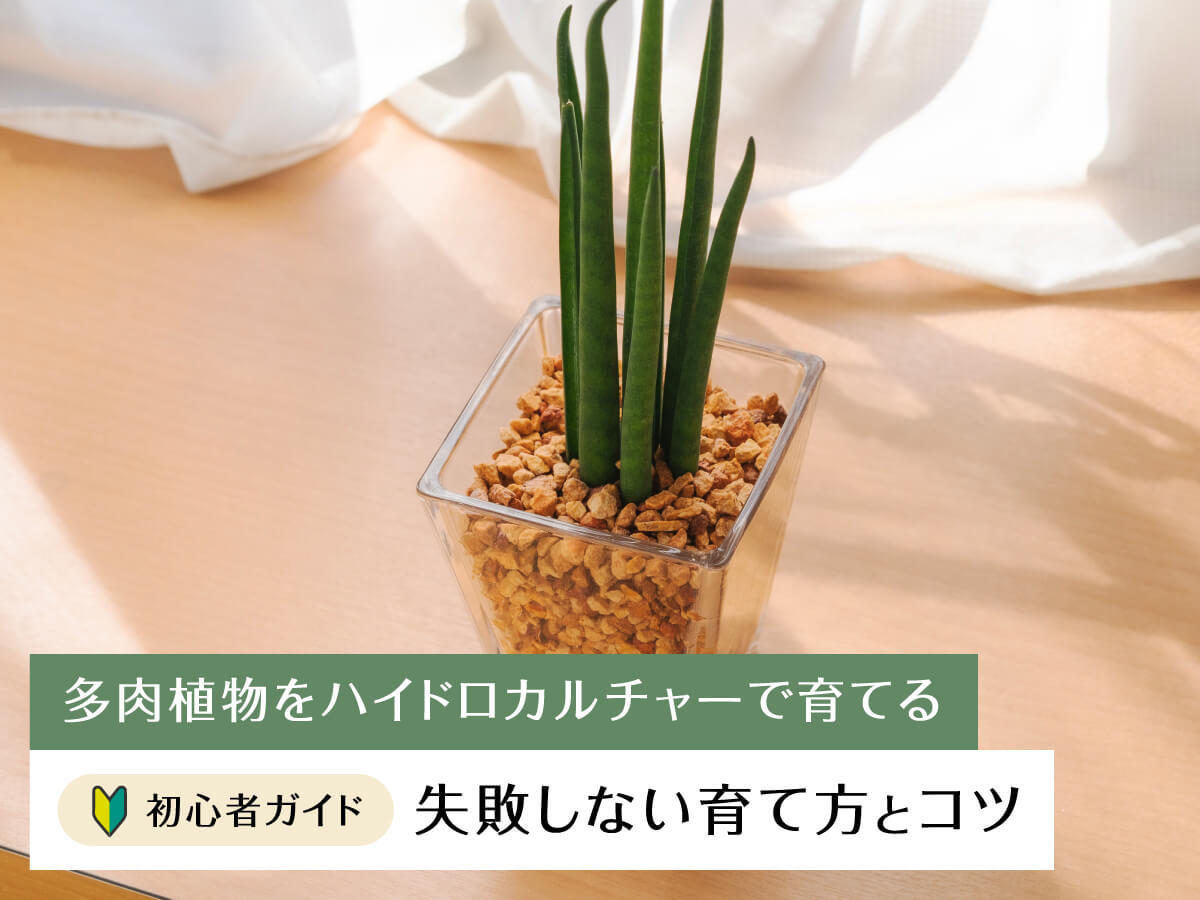
Visually, using transparent containers allows you to observe root growth, and their simple appearance, which matches interior decor, is also a secret to their popularity.
Experience the ease and beauty of succulents grown with hydroculture.
2. Differences between Hydroculture and Hydroponics
Hydroculture and hydroponics are both forms of soil-less cultivation, but they have fundamental differences.
Hydroculture uses mineral-based artificial stones (such as leca) as a growing medium, which are moistened with a nutrient solution to grow plants. Watering frequency is relatively low, and plants absorb the necessary water and nutrients on their own. This method is characterized by a low risk of root rot and fewer pests.
On the other hand, hydroponics is a method where plants are grown directly in water or a liquid nutrient solution. This requires meticulous management of water and nutrient conditions but allows for rapid growth and is suitable for mass production.
Since each has different characteristics and advantages, it is best to choose based on the plant you want to grow and your objectives.
Definitions and Basic Differences between the Two
Hydroculture and hydroponics are both methods of growing plants without soil, and at first glance, they might seem the same, but there are differences in their cultivation methods. Hydroculture, a combination of "hydro" (water) and "culture" (cultivation), refers to a method of growing plants using water and artificial stones. In contrast, hydroponics refers to a method of growing plants by directly immersing their roots in water. The differences are shown in the table below.
|
|
Hydroculture |
Hydroponics |
|---|---|---|
|
Cultivation Method |
Grown with water and artificial stones |
Roots grown directly in water |
Understanding this difference makes it possible to choose a cultivation method suited to your situation and purpose.
3. What is Hydroculture?
Hydroculture is a cultivation method that grows plants without soil, supplying water and nutrients. Specifically, it uses artificial stones (leca) or calcareous minerals (perlite) to create an environment where plant roots can absorb water and nutrients.
The advantages of this method include less effort. Since no soil is used, concerns about insects and diseases are reduced, and frequent watering is not necessary, making daily care easier. Also, the aesthetic appeal is attractive, and using transparent containers allows for visual enjoyment of root growth.
On the other hand, a disadvantage is the difficulty in adjusting nutrient balance. Especially for beginners, it can be challenging to determine the appropriate amount of fertilizer and water.
Thus, by understanding its unique characteristics and managing it appropriately, hydroculture can beautifully grow various plants, including succulents.
Basic Explanation of Hydroculture
Hydroculture is a method of cultivating plants using water and minerals without soil. This method promotes plant growth by supplying water containing the necessary nutrients. Since no soil is used, it offers resistance to diseases and pests, and daily management is also easy. However, water management can be challenging, and improper watering amounts or timing can lead to root rot, so caution is necessary. Another disadvantage is that the initial equipment cost can be higher compared to traditional soil cultivation.
Advantages and Disadvantages of Hydroculture
The method of growing succulents with hydroculture is gaining attention due to its simplicity and characteristics. Its biggest advantage is "easy water management." Hydroculture often uses transparent containers, allowing for visual confirmation of water levels. Additionally, the artificial stones (hydroballs) used are sterile and odorless, and less prone to attracting insects, enabling clean management. Furthermore, in the long term, hydroballs are durable and reusable, making them economical.
4. What are Succulents?
Succulents, as their name suggests, refer to plants that have the ability to store large amounts of water in their leaves and stems. They developed this characteristic to survive in dry environments. Therefore, they can grow with infrequent watering, making them easy for even beginners to cultivate.
Generally, succulents are categorized into three types: "Spring/Autumn type," "Summer type," and "Winter type."
・Spring/Autumn type: Active during spring and autumn, dormant in summer and winter.
・Summer type: Active during summer, dormant in winter.
・Winter type: Active during winter, dormant from spring to autumn.
Understanding these characteristics allows for appropriate cultivation methods for each type of succulent.
General Characteristics of Succulents
Succulents are, as their name implies, a general term for plants that store a lot of water in their bodies. Therefore, they are highly resistant to drought and can grow even with infrequent watering. Moreover, their hardiness makes them easy for beginners to cultivate.
Succulents also come in a variety of shapes and colors, making them popular ornamental plants due to their rich visual appeal. There are various types, from small to large, so you can enjoy planting them in pots or creating arrangements according to your preferences.
Furthermore, succulents tend to prefer light, so it is fundamental to grow them in a sunny location. However, it is advisable to avoid direct sunlight in mid-summer and to manage them in a well-ventilated area.
Explanation of Spring/Autumn, Summer, and Winter Types
Succulents are characterized by their strong drought resistance due to their ability to store water in their bodies. They are particularly divided into three types: spring/autumn, summer, and winter, each with different growth and dormancy periods.
Spring/autumn types are active in spring and autumn and go dormant in summer and winter. During these periods, watering should be restricted. Summer types grow actively in summer and go dormant in winter. During this period, they grow vigorously, so moderate watering is necessary. Winter types, on the other hand, grow all year round but go dormant from spring to autumn and are active in winter.
Since the cultivation methods vary depending on the type of succulent, it is important to be careful when choosing.
🪴Related article: An Explanation of Succulent Types and How to Care for Them
5. Succulents That Can Be Grown with Hydroculture
Various succulents can be grown with hydroculture. Some examples include "Haworthia" and "Crassula."
"Haworthia," in particular, is shade-tolerant and easy to grow indoors, making it recommended for beginners. "Crassula" has charming star-shaped leaves and offers a variety of colors to enjoy.
Choosing these succulents will make it easier to master hydroculture growing techniques. On the other hand, succulents that do not require much water may not be suitable for hydroculture, so it's important to understand their individual characteristics before selecting them.
Introduction to Succulents Suitable for Hydroculture
The following types of succulents are generally suitable for hydroculture:
-
Haworthia: A spring/autumn type succulent with various species, some having translucent thin "windows" and others thick leaves like aloe. Varieties with hard leaves are relatively robust and easy to grow. They are also shade-tolerant, so they can be grown indoors.
-
Crassula: Relatively tolerant to both cold and heat, many varieties grow upright, and among succulents, they prefer more water.
-
Sansevieria: A summer type that is drought-tolerant, making it suitable for hydroculture.
For these succulents, humidity control is crucial in hydroculture conditions. With proper management, they will show beautiful growth.


6. Tools Needed for Hydroculture
To grow succulents using hydroculture, you will need an appropriate pot (container) and artificial stones.
First, when growing succulents in hydroculture, it is crucial to choose a pot with drainage holes at the bottom to prevent root rot. This allows excess water to drain easily. Also, the size of the pot should be selected to match the growth of the succulent.
Next, artificial stones are an important element. Artificial stones are used in place of soil to retain moisture and nutrients and transport them to the plant's roots. There are types such as leca (lightweight expanded clay aggregate) and Seramis, but leca, in particular, absorbs water well and helps prevent root rot, making it suitable for hydroculture.
These are the basic tools needed to grow succulents with hydroculture.
How to Choose the Right Pot (Container)
For hydroculture, a transparent container is recommended so that plant roots can easily come into contact with water. A transparent container allows you to check the water level at a glance, enabling appropriate watering. Additionally, a container with a smooth surface and a wide opening is convenient for inserting and removing plants, making repotting and maintenance easier.
Furthermore, a simple design is recommended for beginners. The fewer complex shapes or decorations, the easier it is to observe and care for the plants, and it also enhances the plant itself.
Below, I've summarized the key points for selecting a suitable hydroculture container:
|
Key Selection Points |
Description |
|---|---|
|
Transparency |
Easy to check water level |
|
Smoothness |
Easy to insert/remove plants |
|
Wide opening |
Easy to insert/remove plants and maintain |
|
Simple design |
Easy to observe and enhances the plant |
Choosing the right hydroculture container directly impacts plant health management. Selecting the appropriate one will make growing succulents with hydroculture even more enjoyable.
Types and Characteristics of Artificial Stones Suitable for Hydroculture
The most common artificial stone used in hydroculture is a product called hydroball. This is a modified natural stone called pumice, which is porous and formed into small spherical shapes. Hydroballs' shape allows for stable water supply, and the fine irregularities on their surface help roots adhere. Especially for plants susceptible to root rot, like succulents, they help maintain appropriate humidity while preventing overwatering. Since artificial stones have different characteristics depending on their type, it is important to choose one that suits the plants you want to grow.
7. How to Repot into Hydroculture
Repotting into hydroculture involves the following steps:
-
Materials: Hydroculture pot, artificial stones, nutrient solution
-
Choosing a succulent: Select a healthy succulent. Spring/autumn types are particularly recommended.
-
Repotting procedure: First, carefully remove the soil from the succulent's roots. Then, place artificial stones at the bottom of the pot, and place the succulent on top. Finally, secure the succulent with artificial stones.
By following these steps, you can repot into hydroculture. Even beginners can easily undertake this, so please give it a try.
Materials Needed
To grow succulents with hydroculture, you will need the following items:
-
Succulent: Choose a type suitable for hydroculture. Spring/autumn types are recommended.
-
Pot (container): Transparent ones are good for seeing the roots. This makes it easier to check root development and moisture conditions.
-
Artificial stones: Choose ones that can retain water and oxygen, such as leca or hyozen.
-
Nutrient solution: A solution specifically for succulents is preferable. Hydroponic fertilizers can also be used.
Once you have these, all that's left is to repot following the proper steps. Growing succulents with hydroculture can be easily started with the right preparation and procedure.
Choosing Succulents
When choosing succulents suitable for hydroculture, you might consider the following two types:
-
Cuttings: Recommended for beginners due to their ease of cultivation.
-
Seedlings planted in soil: Although they require more effort, you can wash off the soil and transplant them into hydroculture yourself.
Both types are readily available in the market, but when selecting seedlings, make sure the roots are firm, the leaves are vibrant in color, and there are no signs of pests or diseases.
Repotting Procedure
The general procedure for repotting succulents into hydroculture is as follows:
-
Select an appropriate succulent. Beginners should start with spring/autumn type succulents, which are fast-growing and robust.
-
Gently remove existing soil and clean the root area. If there are any damaged parts, trim them.
-
Place the plant among the artificial stones and gently secure its base. Then, ensure the entire plant is firmly fixed.
-
Pour water until the pot is full. Then, observe for 2-3 days without adding more water.
By following these steps, you can repot succulents into hydroculture. However, management methods vary for different types of succulents, so please research the specific care instructions for each type.
8. How to Grow Succulents with Hydroculture
To grow succulents with hydroculture, it's essential to first establish a suitable growing environment. Choose a location with ample light and ensure good air circulation. Watering frequency varies with plant growth and season, but generally, bottom-up watering is sufficient. Succulents prefer dry conditions, so avoid overwatering and wait until the pot is completely dry before the next watering. Liquid fertilizer should be mixed with water and applied approximately once every 1-2 weeks, depending on the season and growth stage. Pruning should be done from spring to summer when growth is active to promote healthy development.
Creating an Appropriate Cultivation Environment
To grow succulents with hydroculture, it's important to create an appropriate cultivation environment. First, sufficient sunlight is required as a light source. Succulents generally prefer bright locations, so place them by a window or similar spot where they receive plenty of sunlight. However, avoid strong afternoon sun, which can scorch them.
Next, consider temperature and humidity. Succulents are tolerant of heat but sensitive to cold, so be careful in winter. Also, high humidity can cause root rot, so ensure adequate ventilation.
Finally, proper watering is crucial. Watering in hydroculture differs from traditional soil cultivation. It involves the artificial stones holding moisture, allowing the plant to absorb only what it needs.
Keeping these points in mind, arrange an appropriate growing environment and enjoy cultivating your succulents.
Watering Timing and Amount
Watering succulents in hydroculture differs from conventional soil cultivation. The key point is to "let them dry." In hydroculture, artificial stones continuously supply water directly to the roots. Therefore, to maintain a proper moisture balance, it's necessary to allow for a period of complete drying between waterings.
The specific watering timing is crucial: watch for signs such as the artificial stones drying out or the succulent leaves slightly wilting. The amount of water depends on the plant's size and the season, but generally, water thoroughly until it drains from the bottom of the pot. However, during colder periods like winter, moisture evaporation is slower, which can lead to root rot, so more careful moisture management is required.
Types and Application of Fertilizers
For hydroculture, liquid fertilizer is particularly recommended. This is supplied to the plant along with water, making it quickly absorbed and effective. Liquid fertilizers allow for a balanced intake of minerals, which helps maintain plant health.
Also, succulents tend not to require much fertilizer, and excessive fertilization can lead to root rot, so caution is necessary. Especially in hydroculture, where water management is crucial, the method of applying fertilizer should also take this into account.
As for specific feeding instructions, it is recommended to apply half the amount of regular liquid fertilizer once every two weeks. It's also important to fertilize simultaneously with watering, washing away any excess fertilizer or waste products.
Pruning Methods and Timing
Pruning succulents is a very important task for maintaining plant health and shaping. Even when growing in hydroculture, proper pruning is necessary.
■ Pruning Method: Use sharp scissors or pruning shears, cutting carefully while paying attention to the base of the stem or leaf veins. Keep the cut surface clean and allow the cut to dry to protect the plant from infections.
■ Pruning Timing: Generally, the best times are when new shoots grow from spring to early summer, and before dormancy from autumn to early winter. However, this varies depending on the plant species and condition, so please check the care instructions for each type before pruning.
Proper pruning can promote healthy growth of succulents in hydroculture.
9. Seasonal Tips
When growing succulents in hydroculture, seasonal differences in care are important.
During spring and summer, management in a bright location is recommended to promote active photosynthesis. Many succulents prefer direct sunlight, but sudden strong sunlight can cause leaf burn, so caution is needed. Also, fertilizer is generally applied during the growing season from spring to summer, dissolved in the hydroponic solution.
On the other hand, during autumn and winter, succulents enter dormancy. Therefore, watering should be reduced, and direct sunlight should be avoided. Additionally, fertilizer should generally be withheld during dormancy.
By changing the management method according to the season as described above, it is possible to grow beautiful succulents throughout the year.
Spring/Summer Care Guide
Spring and summer are the growing seasons for succulents. Here are some tips for hydroculture care during this period.
1. Watering: As moisture tends to evaporate easily during prolonged hot weather, water succulents frequently. However, excessive watering can lead to root rot. It is important to maintain a consistent water level.
2. Sunlight: Succulents love sunlight, but direct sunlight can cause leaf burn. Soft morning light is ideal.
3. Temperature: Succulents prefer high temperatures, but they will experience stress above 35°C. It is important to avoid direct sunlight in summer and place them in a well-ventilated area.
4. Fertilizer: Fertilizing during the growing season from spring to summer promotes healthy growth. Generally, it is good to apply liquid fertilizer about once a month.
These were the key points for growing succulents in hydroculture from spring to summer. Please use them as a reference and enjoy growing your succulents.
Autumn/Winter Care Guide
Autumn and winter are when succulents enter dormancy. Even in hydroculture, careful management is required during this period.
-
Watering: From autumn to winter, reduce the amount of water compared to summer. To prevent root rot, ensure proper drainage.
-
Light: Even in winter with less sunlight, succulents need light. If natural light is insufficient, consider using supplemental light such as grow lights.
-
Temperature: Many succulent varieties are sensitive to cold. When keeping them indoors, be careful to keep the temperature above 10°C. Also, avoid direct warm air from heating appliances.
-
Fertilizer: Dormant succulents do not require fertilizer. Refrain from using fertilizer until spring.
By following these tips, you can watch your succulents grow healthily.
10. Summary
Let's reconfirm the appeal of growing succulents in hydroculture by learning how to do it. Hydroculture is a method of growing plants without soil, using only the minimum necessary water and nutrients. This significantly reduces watering frequency and makes plant care much easier. Another major advantage is the reduced occurrence of pests and diseases.
Furthermore, if you use glass containers, you can observe the roots as they grow, which itself becomes part of the aesthetic appeal. Also, succulents with various shapes and colors are popular as interior decorations due to their design versatility.
From now on, try cultivating them according to the seasons. By providing appropriate care for each season, your succulents will become even more beautiful.
Reaffirming the Appeal of Growing Succulents in Hydroculture
The combination of hydroculture and succulents offers great appeal. Firstly, because no soil is used, there's no worry about soil-borne pests and diseases, and it's also less labor-intensive, which is a major advantage. Furthermore, water management is clearly visible. You can visually check whether the roots are too submerged or if there isn't enough water.
Additionally, succulents themselves are easy-to-grow plants, so even beginners can enjoy them. By providing appropriate care for each season, it is possible to grow beautiful succulents. Why not try enjoying a new plant life with this combination of hydroculture and succulents?
Suggestions for Future Enjoyment
There are endless ways to enjoy succulents grown in hydroculture. Succulents come in a rich variety of appearances, and by combining multiple types in one pot, you can create your own unique garden.
Furthermore, if you use transparent pots, characteristic of hydroculture, you can enjoy observing the root growth. You'll be surprised by their vigor, precisely because it's a part that's usually out of sight.
Moreover, arrangements that leverage the characteristics of succulents are also recommended. For example, by planting summer-growing and winter-growing types in the same pot, you can create a plant showcase where the main attraction changes with the seasons.
Growing succulents in hydroculture is easy to start due to its simplicity, yet deep enough to be enjoyed for a long time. Continue to challenge yourself with new plants and arrangements, and enjoy a rich green life.
A wide selection of adorable succulents can be found
at tawawa's online shop here ↓

Please take a look!