This article introduces the basic knowledge and appeal of Haworthia succulents. We also explain specific care tips so that even beginners can grow them with confidence.
1. What is Haworthia: An enriching presence in the world of succulents
Haworthia is a particularly popular type of succulent, loved by succulent enthusiasts worldwide for its beautiful leaf forms and unique patterns. Its name is a tribute to the 19th-century British botanist, Adrian Hardy Haworth. The charm of Haworthia lies in its small size and robustness. Its suitable size for growing on windowsills, desks, or in small pots is one reason for its popularity. Additionally, the robustness unique to succulents makes it possible for even beginners to grow them easily.

(1) Definition of Haworthia
Haworthia is a type of succulent, also known as "windowed succulent" due to its distinctive shape. Native to South Africa, it is mainly cultivated indoors in Japan. The name is derived from Adrian Haworth, a 19th-century British botanist.

(2) Characteristics of Haworthia
Haworthia is a succulent native to South Africa, and its charm lies in its beautiful, translucent leaves. There are many types of Haworthia, and their appearances vary greatly, making them popular for collectors. They are characterized by being divided into two types based on leaf shape and appearance: the "soft-leaved type" which has rounded, translucent parts called windows, and the "hard-leaved type" which has hard, pointed leaves. With many species and variations in shape and color, there is also the joy of collecting them.
Furthermore, because Haworthia thrives in desert regions, it is highly tolerant to drought and requires very little watering or fertilizer, making it suitable for beginners. Moreover, its unique appearance and diverse shapes and patterns offer endless enjoyment in cultivation. Due to these characteristics, Haworthia is enjoyed as an ornamental plant in various settings, such as homes and offices.
2. Types of Haworthia and their charm
The world of Haworthia succulents is diverse, with each type brimming with charm. This time, we will introduce some of the particularly popular types.
(1) Haworthia cooperi: Haworthia cooperi has striking plump leaves that shimmer transparently like jewels, earning it the name "Dewdrop Plant." It is an easy-to-grow variety for beginners.
(2) Kyo no Hana: Kyo no Hana is a particularly popular variety in Japan, characterized by its compact and easy-to-handle size.
(3) Retusa: Retusa is characterized by its triangular leaves and vertical lines, giving it a stylish impression.
(4) Gyoza: Gyoza, as its name suggests, is characterized by beautiful fan-like spreading leaves, making it popular as an interior decoration.
These are just a few varieties, but we hope you've felt the charm of Haworthia. Understanding each individual characteristic and finding a Haworthia that suits you will lead to successful cultivation.
(1) Haworthia cooperi var. obtusa
Among Haworthia, Haworthia cooperi var. obtusa is a particularly charming species. Also known as "lenticular" due to its protruding leaf shape, obtusa is characterized by its rounded, thick leaves, offering a soothing presence just by looking at it.
Furthermore, the leaves of this species have transparent "windows," allowing photosynthesis to occur internally while avoiding direct sunlight, thus promoting robust growth. Its ease of cultivation is another appeal; by avoiding direct sunlight and maintaining dryness, even beginners can grow it beautifully.
Additionally, Haworthia cooperi var. obtusa, when exposed to plenty of sunlight from spring to autumn, develops reddish leaves, allowing you to enjoy beautiful gradations. Therefore, obtusa, with its interesting appearance and ease of cultivation, is a recommended species for succulent beginners.

(2) Haworthia 'Kyo no Hana'
Among Haworthia, "Kyo no Hana" is particularly popular. Its beautiful green leaves fascinate people, and their beauty is further enhanced when the tips turn pink. "Kyo no Hana" also grows vigorously, developing rapidly under suitable conditions. When the pot becomes too small, you can easily propagate it by dividing the bulbs and replanting them in new pots.
"Kyo no Hana" grows particularly actively from spring to early summer, and during this period, it is recommended to water generously when the soil dries out. On the other hand, during midsummer and midwinter, which are dormant periods, reduce watering and let it rest indoors.
The appeal of "Kyo no Hana" lies not only in its beauty but also in its ease of cultivation. Even beginners can easily grow it, allowing them to fully enjoy the charm of succulents.
(3) Haworthia retusa
Haworthia retusa is a succulent native to South Africa, whose beautiful shape and patterns captivate many enthusiasts. Its leaves are geometric and neatly shaped, with transparent "windows" at their tips. This window section features distinctive vein patterns, which enhance its appeal when light shines through.
It is easy for beginners to grow, and it is recommended to cultivate it in low light. An ideal environment is a well-ventilated, semi-shaded outdoor area or a windowsill indoors. Watering should be done about once a week in spring and autumn, and sparingly about once a month in midsummer and midwinter, as growth slows down during these periods.
(4) Haworthia truncata (Gyoza)
Among Haworthia, the particularly popular "Gyoza" is a work of art with its beautiful form. "Gyoza" has rounded leaves that spread out like a fan, and its fleshy leaves are fresh and thick. In addition to its appearance, its ease of cultivation is another appeal. While "Gyoza" prefers sunlight, direct sunlight should be avoided. It is also drought-tolerant, but well-draining soil will promote healthier growth.
By understanding these characteristics and providing appropriate care, you too can become a great Haworthia cultivator.
(5) Haworthia maughanii
"Manzou" is one of the popular cultivated varieties within Haworthia. As its name suggests, it is characterized by its ability to enjoy various shapes and colors. Its leaves are thick and have a beautiful, translucent color when exposed to light.
Ease of cultivation is also one of its charms; if you maintain appropriate sunlight and watering, it is a relatively easy species for beginners to handle. It is resilient and tolerant to both drought and cold. Additionally, its rapid growth, often developing into a large plant in a few years, is another characteristic.
Manzou, with its beautiful appearance and ease of cultivation, can be said to represent an attractive aspect of Haworthia succulents. It is a recommended variety for those considering starting with Haworthia.
(6) Haworthia fasciata (Zebra Plant)
Among Haworthia, "Jūni no Maki" (Zebra Plant) is a particularly unique species, literally characterized by its leaves spiraling 12 times. This appearance, quite different from other plants, suggests a high ornamental value.
As "Jūni no Maki" grows, its spiral becomes even more prominent due to multiple layers of leaves, exuding a sophisticated elegance. Its unique shape conveys individuality and presence, making it a popular variety among succulent enthusiasts.
A key to successfully growing "Jūni no Maki" is to keep it slightly dry. High humidity can cause leaf rot, so caution is needed. As with all Haworthia, regular leaf checks and necessary care are essential to maintain its beautiful appearance.
(7) Haworthia viscosa
Haworthia viscosa is a succulent characterized by its hard, dark-colored leaves. Its triangular leaves overlap regularly, growing like a tower. Native to South Africa, it is drought-tolerant, but sensitive to high temperatures and humidity in summer, and cold in winter, so indoor management may be necessary depending on the climate.
The basic care involves placing it in a well-ventilated, semi-shaded area and watering it moderately. Especially in spring and autumn, provide fertilizer for nutrient replenishment. During the hot summer months, reduce the amount of water, and in winter, it is recommended to bring it indoors if the temperature drops below 7-8 degrees Celsius.
Understand the care and appeal of Haworthia viscosa and try growing this beautiful plant with minimal effort.
3. How to Grow Haworthia: A Beginner's Guide
■ Choosing the right sunlight and location: Haworthia can be grown indoors, but a sunny spot near a window is ideal. Avoid direct sunlight; light filtered through a sheer curtain is appropriate. In summer, use a circulator to ensure good ventilation.
■ Tips for soil preparation: It is recommended to use specialized succulent potting mix and incorporate slow-release fertilizer and insecticide.
■ Planting and repotting methods: Repotting Haworthia is best done every 1-2 years, between May and September.
■ Watering tips: The key to watering Haworthia is to withhold water until the leaves become wrinkled. Reduce watering in winter and return to normal in spring.
(1) Choosing the right sunlight and location
Haworthia, among succulents, does not prefer strong light. It is crucial to place it in a location that does not receive direct sunlight throughout the year. The reason is that strong sunlight can cause sunburn and weaken the entire plant. On the other hand, it cannot grow vigorously in a place where it receives no sunlight at all. It is important to find a place with moderate light.
Also, don't forget to place it in a well-ventilated area. High humidity can lead to root rot and pest infestations. Good ventilation helps to dissipate moisture and keep Haworthia healthy.
By keeping these points in mind, you can create the right environment for your Haworthia.
(2) Tips for preparing soil
In growing Haworthia, soil preparation is a very important step. First, Haworthia prefers well-aerated and well-draining soil. Therefore, it is good to use general succulent-specific soil, or to create suitable well-draining soil by mixing perlite, kanuma soil, light stone, etc., into a horticultural potting soil base.
Additionally, it is advisable to mix in a small amount of slow-release fertilizer when planting. This provides a long-lasting fertilizer effect as a base fertilizer, aiding Haworthia's growth.
By carefully preparing the soil mixture and fertilizer in this way, Haworthia can grow healthily.
(3) Planting and repotting methods
Planting and repotting Haworthia is simple. For planting, simply place the Haworthia seedling in a pot and fill the surrounding area with succulent soil. However, choose a pot of a certain size, as a pot that is too small can cause the roots to intertwine.
Repotting, on the other hand, is recommended approximately every 1-2 years. Remove the plant from the pot and discard the old soil. Then, repot it in fresh soil. At this time, it's a good idea to mix in a small amount of slow-release fertilizer. Haworthia is a plant that grows with just water and light, so use fertilizer sparingly.
By following these steps, you can ensure healthy growth for your Haworthia.
(4) Watering tips
The appropriate method for watering Haworthia varies depending on the season and the plant's condition. During the growing seasons of spring and autumn, water thoroughly once the soil surface has dried. However, if the leaves become soft overall or their color fades, reduce watering. Conversely, during the dormant periods of summer and winter, water only after the soil has completely dried out, and use about half the amount of water as during the growing season. Caution is needed, as persistently moist soil can lead to rot. When watering, give enough water for it to drain from the bottom of the pot, and ensure excess moisture is discharged.
4. How to Propagate Haworthia: Division and Leaf Cuttings
The common methods for propagating Haworthia are division and leaf cuttings.
Steps for division: Division is performed when the mother plant grows large or when offsets increase. First, remove the Haworthia from its pot and carefully separate the offsets from the mother plant, being careful not to damage the roots. Simply planting them in separate pots will begin the cultivation of new Haworthia.
Steps for leaf cuttings: Leaf cuttings are also a simple way to propagate. First, gently twist a healthy leaf from the mother plant at its base. Be careful not to break the leaf midway, as the entire leaf is needed. Place it on the soil in a sunny spot indoors, and wait for new shoots to emerge.
These are the methods for propagating Haworthia. Both methods are easy to do, so please give them a try.

(1) Steps for division
Dividing Haworthia is an important step in its cultivation. Here are the steps:
Confirm that offsets have formed from the mother Haworthia plant and choose a time when the offsets are sufficiently grown.
When carefully separating offsets from the mother plant, it is important to avoid damaging the roots.
After separating the offsets, do not plant them immediately; let them dry overnight. This is to sterilize the cut surface.
After leaving them overnight, plant them in new pots. At this time, use well-draining soil and be careful not to plant too deeply.
These are the basic steps for dividing Haworthia. By learning how to propagate Haworthia, you can increase your collection of beautiful succulents.
(2) Steps for leaf cuttings
Propagating Haworthia by leaf cuttings may seem difficult at first glance, but it is actually relatively simple. First, select a healthy leaf and gently twist it off from the base of the mother plant. The key here is not to break the leaf midway, as the entire leaf is needed.
Place the detached leaf in a dry, sunny spot indoors. After a few days, roots will emerge from the cut end, and new shoots will appear. Once this happens, you can plant it in dry succulent potting mix to grow a new Haworthia.
However, after planting the cutting, avoid direct sunlight and keep it in a well-ventilated, semi-shaded area. Water when the soil surface dries out. Once the roots are firmly established, move it to a sunny location.
5. The moment Haworthia flowers
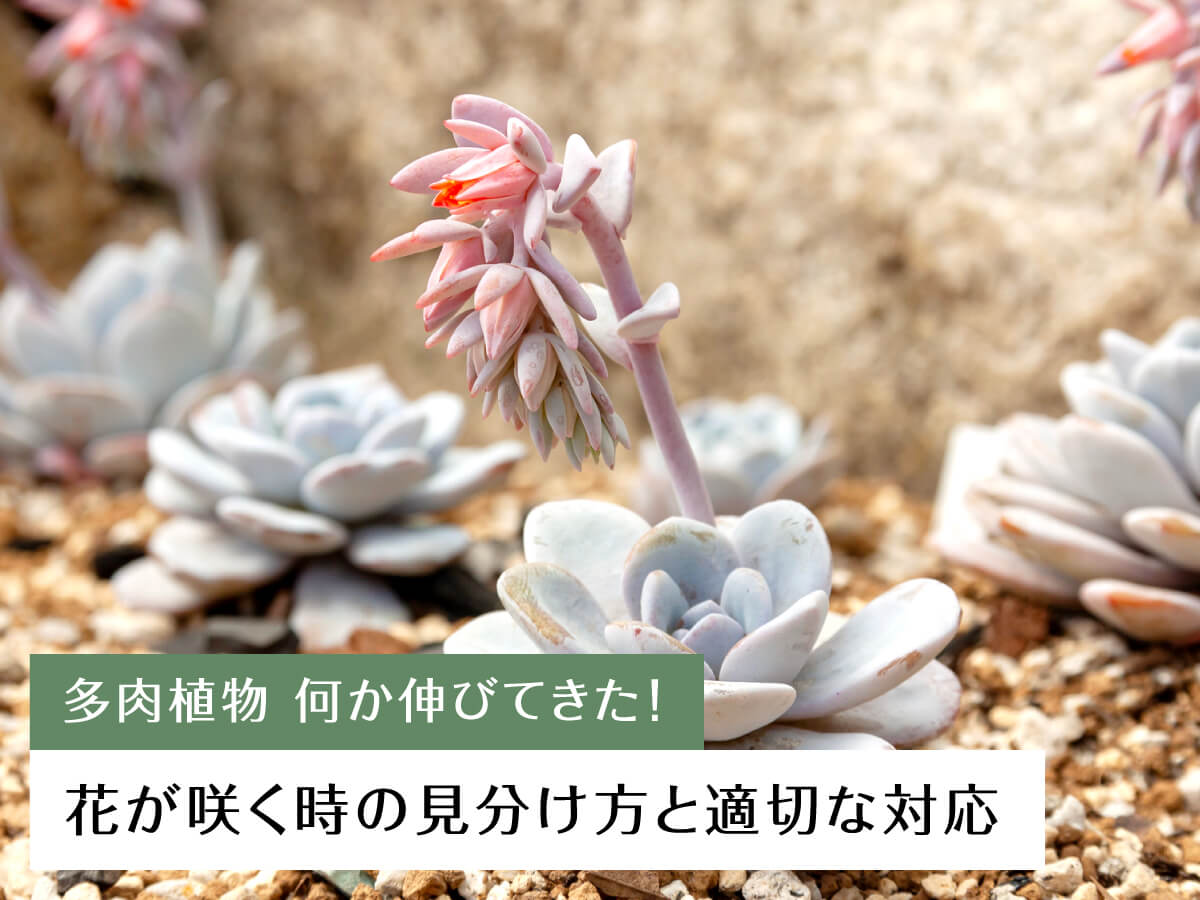
The vibrant flowers of Haworthia further enhance its delicate charm. They bloom from February to June, and depending on the species, they may produce pink or white flowers.
However, not all Haworthia plants flower. Some varieties may not produce blooms. But if yours does flower, it's a testament to your cultivated skills. That moment can be a moving experience that deepens your connection with your beloved Haworthia.
6. Common Pests and Diseases of Haworthia and How to Combat Them
Like other succulents, Haworthia can suffer from diseases and pests. "Root rot" is a common disease in Haworthia, often caused by overwatering or improper drainage. To prevent this, avoid excessive watering and use soil with good drainage.
Haworthia can also be plagued by pests, especially aphids, scale insects, and fungus gnats. To combat these pests, regular observation and early eradication upon discovery are essential. Specific eradication methods include using commercially available pesticides or, for natural approaches, using natural ingredients such as neem oil.
(1) Common diseases of Haworthia and their countermeasures
Haworthia, depending on how it's grown, is susceptible to root rot and soft rot.
Root rot is a disease that occurs easily in hot and humid environments and is particularly common in summer when water management is difficult. The tips of the leaves turn black, and eventually the entire plant blackens. As a preventive measure, it is effective to ensure the plant is placed in a well-ventilated environment and to water from the bottom of the pot rather than directly on the roots.
Soft rot, on the other hand, is a disease that occurs easily in hot and humid conditions, characterized by leaves turning black and becoming watery. As a preventive measure, it is important to water in the morning and ensure that moisture evaporates during the day.
Early detection is key for these diseases. Observe regularly and take early action if any abnormalities are found.
(2) Pests that commonly affect Haworthia and their countermeasures
Like other succulents, Haworthia are susceptible to pests such as aphids, scale insects, and fungus gnats.
-
Aphids: These pests infest leaves and stems and drain nutrients. In the early stages of infestation, they can be washed off with water or a plant-safe detergent solution. Releasing many ladybugs, their natural predators, is also effective.
-
Scale insects: These pests cling to leaves and stems and suck out nutrients. Early detection is crucial here too, and physical removal or the use of pesticides is effective.
-
Fungus gnats: These pests lay eggs on the soil surface, and the hatched larvae feed on the roots. To prevent their occurrence, manage watering appropriately and avoid overly moist soil.
By taking the measures described above, you can protect your Haworthia from pests.
7. Summary: The Charm of Haworthia and Tips for Growing Them
With their unique shapes and beautiful patterns, Haworthia attract attention among succulents. Each type has its own distinct appeal, and understanding their individual characteristics will allow you to enjoy them more deeply.
Key points for growing them include providing appropriate sunlight and well-draining soil. Particularly for watering, given Haworthia's preference for dry conditions, it's essential to avoid overwatering. Furthermore, Haworthia can be propagated through division or leaf cuttings, which is another one of their charms.
For diseases and pests, it's important to strive for prevention and take early action. Enjoy your daily life with Haworthia while keeping proper care in mind.