Whether you have the correct knowledge about watering succulents dramatically changes your success rate in growing them. This article thoroughly explains everything from the basic methods of watering succulents to how to adjust watering based on the season and type.
1. What is Succulent Watering?
Watering succulents refers to the hydration provided to maintain their growth and health. As their name suggests, succulents store water in their leaves and stems, and proper watering can maintain their vibrant appearance and growth rate. However, the correct amount of water is crucial; too much can lead to root rot, while too little will cause the plant to shrivel. Succulents, in particular, are strong against dryness but weak against humidity, so appropriate watering is necessary. Bearing these points in mind, this article will explain in detail the correct method for watering succulents.
(1) Basic Succulent Watering Method
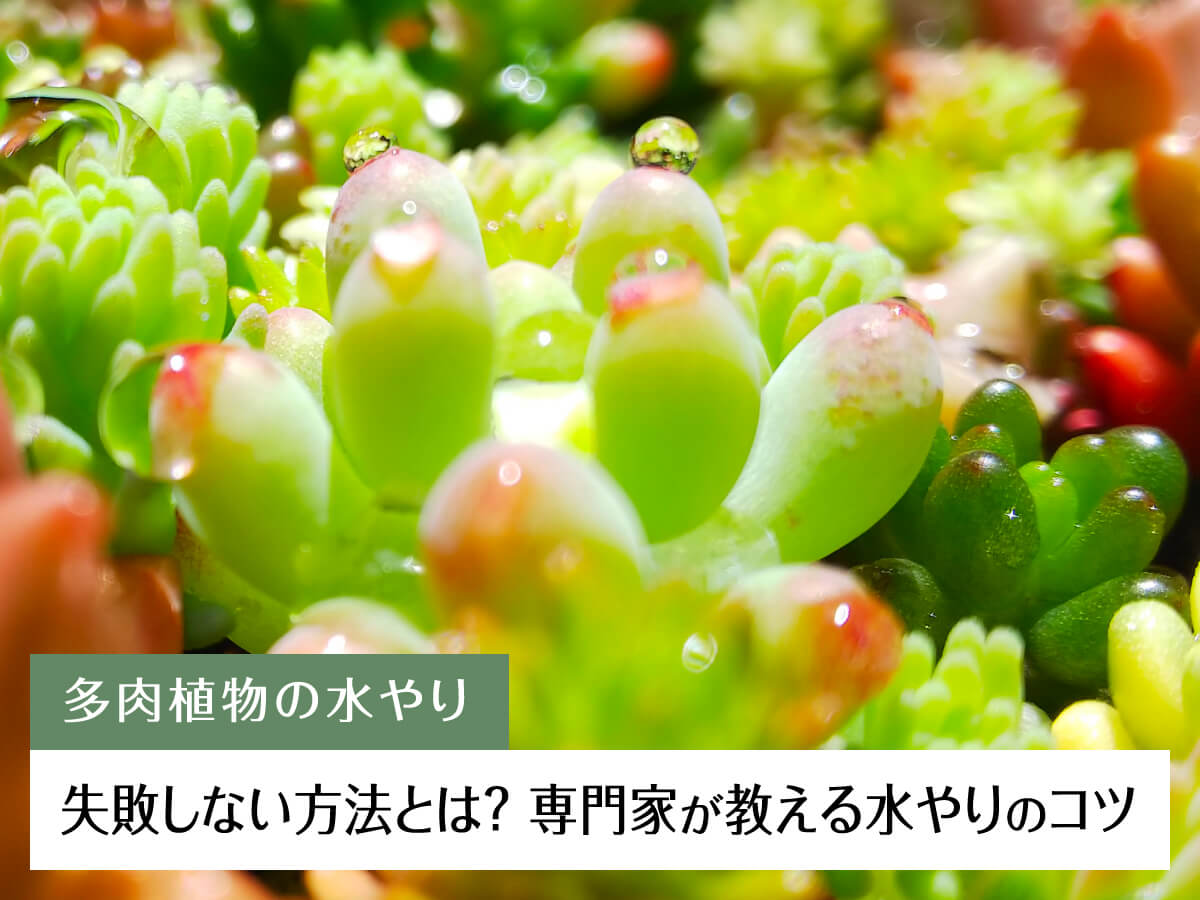
Watering succulents varies between their growing and dormant seasons. During the growing season, shriveled leaves are a sign that it's time to water. At this point, water thoroughly until water flows out from the bottom of the pot. During the dormant season, aim to water about once every few weeks to a month.
Also, a tip for watering is to try to water only the soil. However, it is also necessary to spray water on the leaves to deter pests like mites, so there is no need to be overly concerned about watering during dry periods. Care is needed during the humid rainy season and summer. If water gets into the gaps between the leaves, it can cause them to rot and weaken. If water remains on the leaves after watering, it is safe to blow it off with a blower or similar tool.
As an important point, succulents are plants that have evolved in harsh natural environments, so it is necessary not to overprotect them and to let them experience moderate dryness. By keeping this in mind, succulents will grow healthily.

(2) Why Proper Watering is Necessary
Although it is said that succulents are best grown "on the dry side," if they are not watered at all, their leaves and stems can wither due to lack of moisture, eventually leading to death. Therefore, watering is necessary to maintain the health of succulents.
Furthermore, watering succulents is not just about providing water, but about doing so at the right time. It is necessary to water at appropriate times while checking the plant's growth, environmental conditions such as humidity and temperature, pot size, and soil condition. Watering carried out with these considerations will be the appropriate way to successfully grow succulents.

2. Recognizing Succulent Watering Signs
You can tell if a succulent needs water by observing its condition. Here are the main signs:
-
When leaves drop off: This indicates insufficient sunlight. Succulents love light, so move them to a sunnier spot.
-
When the whole plant is limp: This is likely due to poor air circulation. Improving air circulation can enhance the plant's health.
-
When leaves shrivel: This indicates a lack of moisture. If you see this sign, water promptly.
As described above, succulents will tell you what they need through their condition. It is important to not overlook these signs and to provide appropriate care.
Related articles here↓
[Why Succulents Die] Care Methods and Revival Tips for Beginners
(1) When leaves drop off → Lack of sunlight!
Succulents generally prefer a sunny environment. In particular, if leaves are falling off easily, it is highly likely due to a lack of sunlight. When succulents cannot absorb enough light, their growth and photosynthetic capacity decrease, resulting in leaf drop.
As a countermeasure, it is recommended to move your succulent to a spot where it receives plenty of sunlight. However, avoid direct sunlight in midsummer, and instead, provide shade or choose a bright spot with partial shade.
Additionally, for succulent species that require a lot of light, insufficient sunlight can lead to elongated stems or "etiolation," where the stems grow thin and leggy with sparse leaves. Therefore, it is necessary to ensure adequate sunlight according to the type of succulent.

(2) When the whole plant is limp → Improve air circulation
When a succulent becomes entirely limp, it's possible that moisture isn't reaching near the base of its roots. This could be due to poor air circulation, which prevents moisture from evaporating, or compacted soil that prevents water from spreading.
What is important here is to water thoroughly and ensure good air circulation. To improve air circulation, placing the plant in a breezy location is ideal. If that's not possible, consider using a circulator or fan.
If the soil has become compacted, it is necessary to take the succulent out of the pot, loosen the soil, and replace it with new soil. By improving the growing environment of the succulent in this way, it is possible to restore it from its limp state.
(3) When leaves are shriveled → Water it
When succulent leaves shrivel, it's a sign of dehydration. In this situation, proper watering is necessary. Specifically, once the leaves are shriveled, water generously until water drains from the bottom of the pot.
Also, during the hot summer months, it is recommended to water in the cooler hours, such as evening or night, to minimize the possibility of stuffiness after watering and to prevent sunburn on the leaves from water droplets acting as lenses. Conversely, in winter, to avoid the soil freezing due to the cold at night or dawn, it is best to water after the morning chill has subsided or during the warmer hours of the morning.
Shriveled leaves will recover with proper hydration. However, since succulents are plants that have adapted to harsh environments, avoid over-caring for them and aim for moderate watering.

3. Specific Watering Methods for Succulents
There are several key points to watering succulents. First, during the growing season, when the leaves shrivel, water generously until water flows out from the bottom of the pot. On the other hand, during the dormant season, aim to water about once every few weeks to a month. This is because succulents store water in their leaves, and frequently watering when the soil is dry during the growing season can actually lead to root rot. Also, infrequent watering during dormancy makes them more resistant to cold. Keep these points in mind when watering your succulents.
(1) How often should I water?
The frequency of watering succulents changes with the season and temperature. Generally, during the growing season from spring to autumn, water when the leaves shrivel. However, this is not a hard and fast rule, as there are many types of succulents, and each has a different growth cycle and water requirement.
Furthermore, many succulents enter a "dormant period" during summer temperatures above 30 degrees Celsius or winter temperatures below 10 degrees Celsius. During this period, it is recommended to water sparingly or, in some cases, to withhold water completely ("dry watering") as long as the roots do not dry out.
According to reference information, the recommended dry watering period varies by growth type as follows:
|
Growth Type |
Recommended Dry Period |
|---|---|
|
Spring/Summer Type |
Summer (above 30°C), Winter (below 10°C) |
|
Summer Type |
Winter (below 10°C) |
|
Winter Type |
Summer (above 30°C) |
To grow healthy succulents, proper watering is essential. Understand the characteristics of each plant and strive for appropriate care.
(2) How much water should I give?
The basic rule for watering succulents is to water generously until it flows out from the bottom of the pot. For beginners who are not yet confident in watering succulents, it is safer to remember the criterion "when the leaves shrivel" rather than "when the soil dries." This is because succulents have the property of storing a lot of water in their leaves, so there may still be moisture even if the soil is dry. Try to grow healthy succulents with appropriate watering amounts.
(3) When is the best time to water?
The time of day is also an important factor when watering succulents.
During hot summer periods, it is recommended to water in the cooler hours, such as evening or night, to prevent the plants from becoming stuffy when temperatures rise after watering. Conversely, in cold regions during winter, to avoid damage from frostbite due to freezing after watering, it is best to water after the morning chill has subsided or during the warmer hours of the morning.

4. Succulent Placement and Its Effects
Succulents naturally inhabit environments with abundant sunlight. Therefore, when growing them at home, it is crucial to choose a location where they receive sufficient sunlight. For most succulents, indoor window light is not enough. Thus, places like balconies or under eaves, where they get direct sunlight, are considered ideal.
Good ventilation is also a crucial point. Succulents can suffer from root rot if humidity is high, so it's good to place them in a well-ventilated area. Furthermore, winter care needs to be considered. Many varieties are not cold-hardy, so move them indoors or cover them with non-woven fabric or blankets as a preventative measure.
Thus, the placement of succulents greatly influences their growth and health. With appropriate location selection and climate management, you can grow beautiful succulents.
Related articles here↓
Do you know where to place succulents? The reason why "outdoors" is optimal
(1) A place with sufficient sunlight
Succulents, as their name suggests, have thick leaves and stems that store water. Because of this trait, they often inhabit harsh environments like deserts and grasslands. Therefore, succulents truly thrive in environments where they can receive ample sunlight. The optimal place to grow succulents is "outdoors," where they get enough sunlight. However, direct sunlight in midsummer can be too strong and cause leaf burn, so caution is needed. From around the rainy season until early autumn, ensure adequate shade or light filtering while arranging them so they receive even sunlight. Additionally, some succulents are shade-tolerant. These can be grown indoors. Even in such cases, choose a spot near a window or where they can get light. Approximately 5 hours of sunlight per day is considered ideal.

(2) A well-ventilated area
Succulents are drought-tolerant plants, but conversely, they dislike humid or enclosed spaces. Therefore, it is recommended to grow them in a well-ventilated area. What does good ventilation mean? It refers to a state where fresh air flows smoothly. Specifically, a place where natural breezes pass through, such as a balcony or garden, is ideal.
However, in summer, avoid areas with excessively strong direct sunlight, and it's important to choose a well-ventilated spot even if it's shady. This is because succulents dislike high temperatures and humidity, and a place where heat tends to accumulate can cause root rot or leaf burn. Therefore, growing succulents in a well-ventilated area helps them grow healthily.
(3) Winter Care Methods
Watering succulents in winter differs from other seasons. Specifically, first, you need to consider the appropriate watering frequency. During colder seasons, succulent growth slows down, reducing their water needs. Therefore, you should reduce the watering frequency compared to the growing season.
Also, in winter, it's necessary to protect succulents from frost and freezing. Especially if growing outdoors, move succulents indoors when temperatures drop near freezing to prevent them from freezing. For succulents sensitive to cold, care should be taken when temperatures are around 5°C or lower.
Furthermore, the timing of watering is also important. In winter, less frequent watering is fine, but it is dangerous to completely withhold water to the point where the roots dry out. If you do water, check the weather forecast and choose a day where the temperature, and the following few days, will not be too low. It is also recommended to water at a time of day furthest from the coldest hours, such as in the morning after the dawn chill has subsided or during the warmer hours of the morning.
As described above, watering succulents in winter is important to consider the appropriate frequency, frost protection, and watering timing.
5. Succulent Fertilization and Watering
Just like watering succulents, the method of applying fertilizer significantly impacts their growth and health. Generally, when fertilizing succulents, it is recommended to use a fertilizer that lasts for several months to a year when repotting.
Succulents have evolved to survive with scarce nutrients in harsh environments, so frequent fertilization is not necessary. However, maintaining a proper balance between fertilizer and water can support healthy succulent growth.
Necessity and choice of fertilizer: Fertilizer is not absolutely necessary for succulents to live, as they naturally have the ability to store nutrients, but appropriate fertilizer use is important for safer and healthier growth. When choosing fertilizer, select one with a good balance of nitrogen, phosphorus, and potassium.
Balance of fertilizer and watering: Watering and fertilizing are closely related. Excessive watering can not only cause root rot but also wash away nutrients from the fertilizer. Therefore, a balance between appropriate watering and fertilizer is crucial.
Based on the above points, deepen your understanding of succulent watering and fertilization to grow healthier succulents.
Related articles here↓
How to Fertilize Succulents Properly! Methods to Bring Out Their Best Condition
(1) Necessity and choice of fertilizer
Fertilizer is not absolutely necessary for succulents to survive. However, for safer and healthier growth, proper use of fertilizer is important. This is because providing fertilizer supplies the nutrients plants need and aids in their growth.
When choosing fertilizer, it's best to select one specifically for succulents. Succulent-specific fertilizers contain a balanced mix of nutrients that succulents need, and providing the appropriate amount will promote the plant's health.
The timing of fertilizer application is also crucial. For example, one method is to apply fertilizer once when repotting, and then not fertilize again for a year. Always read the instructions carefully for the fertilizer you choose to determine the correct usage and frequency.
(2) Balance of fertilizer and watering
The balance of fertilizer and watering is extremely important for succulents. Fertilizer helps growth, but too much can actually cause damage.
The optimal time to fertilize, while depending on the variety, is typically spring or fall, which are the growing seasons for many succulents. Also, for varieties like Sedum and Crassula that prefer both water and fertilizer, increasing the frequency of fertilization is not an issue. However, during the cold winter months, it is recommended to reduce both fertilizer and watering.
If the balance between fertilizer and watering is maintained, your succulents will grow healthily.

6. Common Watering Mistakes for Succulents and Their Solutions
Common mistakes when watering succulents involve inappropriate frequency or amount.
(1) Watering too frequently: Succulents store water in their leaves. Therefore, watering too often can lead to root rot. Water only when the leaves become wrinkled or the soil is completely dry.
(2) Watering too little: In the past, it was sometimes said that succulents should be watered with small amounts using a spray bottle every day or every few days. However, the amount of water from a spray bottle is too small to reach the roots. After the soil has thoroughly dried, water thoroughly until water drains from the bottom of the pot.
(3) Incorrect watering timing: The frequency of watering needs to be changed between the growing season and the dormant season. It is especially important to reduce watering during the dormant season and water at appropriate intervals during the growing season.
Avoiding these mistakes will lead to the cultivation of healthy succulents.
(1) Watering too frequently
Succulents are drought-tolerant plants and require appropriate watering. Frequent watering can keep the roots submerged, leading to root rot. Especially in winter, when they enter dormancy, it is important to reduce watering. The frequency of watering also varies depending on the growing season and temperature.
Specifically,
-
Spring/Summer type succulents: No water in summer at temperatures above 30 degrees Celsius and winter at temperatures below 10 degrees Celsius
-
Summer type succulents: No water in winter at temperatures below 10 degrees Celsius
-
Winter type succulents: No water in summer at temperatures above 30 degrees Celsius
Using these guidelines, aim for watering that matches each growth type. Proper watering is essential to prevent root rot and cultivate healthy succulents.
(2) Too much or too little water
When watering succulents, if the amount of water is too much, it can cause root rot, and if it's excessive, the plant itself may drown. Succulents have evolved in ecosystems that are resistant to drought, so excessive moisture actually stresses them.
The specific amount of water should be enough until it drains from the bottom of the pot. This generally indicates that the soil is moist and sufficient water has reached the roots. Also, always discard any excess water after watering. If water droplets at the bottom of the pot do not evaporate, it can lead to root rot.
Conversely, watering only with a spray bottle does not provide enough water. It is important to provide enough water to reach the roots thoroughly.
The key is to provide enough moisture for wrinkled leaves to recover. Use this as a guide to ensure proper watering.
(3) Incorrect watering timing
The timing of watering succulents is extremely important. Succulents are drought-tolerant plants, and it is generally recommended to water them only after the soil has completely dried out. However, the specific timing must take into account the plant's growth status, environmental conditions, pot size, and soil condition.
Additionally, succulents come in three growth types: "spring/autumn type," "summer type," and "winter type," and the watering timing varies depending on each type. While you water during the growing season, the basic guideline is to reduce moisture during the dormant season.
By adhering to the appropriate watering schedule, succulents can grow healthily and maintain their beautiful appearance.

It is watered moderately, but does not grow.
7. Summary
-
(1) Summary of key points for succulent watering: During the growing season, water succulents thoroughly until water drains from the bottom of the pot when their leaves become wrinkled. During dormancy, either withhold water completely or water once a month. Also, from spring to autumn, it's important to water only the soil, as water getting into the leaf crevices can cause rot due to humidity.
-
(2) Master watering to grow healthy succulents: By mastering proper watering techniques, you can grow healthy succulents. Understand the key watering points and provide appropriate care.
In any case, succulent watering varies depending on their growth type. It is important to observe and provide appropriate care.
(1) Summary of key points for succulent watering
There are three main points to watering succulents.
The first is "identifying the growing and dormant seasons." During the active growing season, succulents should be watered generously, while during dormancy, they should either be left alone or watered about once a month.
The second is "observing the condition of the leaves." If the leaves become wrinkled, the succulent needs water. In such cases, water thoroughly until it drains from the bottom of the pot.
The final point is "the time of day for watering." From spring to autumn, watering in the cooler evening or nighttime hours allows the plant to absorb water without stress.
These are the basic points for watering succulents. Keep these in mind to grow healthy succulents.
(2) Master watering to grow healthy succulents
By mastering watering, succulents will grow beautifully and healthily. The key is to understand the appropriate frequency and amount. Succulents dislike excessive moisture, so water generously after the soil has completely dried or when the leaves become wrinkled. Also, choosing a pot with good drainage can prevent root rot.
Furthermore, the timing of watering is also crucial. During hot periods, watering in the evening or at night, and during cold periods, in the morning, can reduce the stress on succulents caused by watering and temperature. By keeping these points in mind, you can maintain the health and beauty of your succulents.