This article lists succulent plant names and types. To make it easy for beginners to understand and remember, we'll also explain each plant's characteristics and how to care for them. Find the perfect succulent for you and enjoy growing it.
1. Introduction
Succulents, though commonplace, captivate many with their rich variety and the joy of nurturing them. They are attractive plants, easy for beginners to handle, and offer new discoveries even for advanced growers due to their diversity. In this article, we will guide beginners through the names and types of succulents in an easy-to-understand manner. We will explain popular types, varieties recommended for beginners, and rare types for advanced growers. We will also introduce how to choose by color, shape, and ease of care. Furthermore, we will provide a wide range of information about succulents, from basic care and seasonal maintenance to how to incorporate them into your interior decor. This is a must-read for both those new to succulents and those already growing them.
2. What are succulents?
Succulent plants, as their name suggests, refer to plants with "much flesh." This term encompasses a group of plants characterized by their thick, fleshy parts (leaves, stems, or roots) that store water and nutrients, enabling them to survive in dry conditions. Their growth forms are diverse, ranging from those with fleshy leaves to those with fleshy stems or roots.
One of the charms of succulents is their diverse appearance. There are many variations within a single species in terms of vibrant leaf colors, shapes, and even flower colors. Therefore, even within the same species, individual plants can look different, and each one is unique.
(1) General characteristics
As their name suggests, succulents are characterized by their fleshy leaves and stems. Despite their appearance, their primary habitat is arid regions. They have a structure that allows them to retain moisture for long periods, making them resistant to drought. However, they do not thrive in high humidity or cold climates. Succulents come in two types: evergreen, which stays green all year, and deciduous, which sheds leaves during dormancy and sprouts new ones during the growing season. Some species also produce beautiful flowers.
The table below summarizes the general characteristics of succulents.
Characteristic |
Description |
|---|---|
Fleshy leaves and stems |
Can retain moisture for long periods |
Drought-resistant |
Primary habitat is arid regions |
Dislikes humidity |
Requires well-drained environment |
Evergreen/Deciduous |
Varies by type |
Blooms |
Varies by type |
(2) The appeal of succulents
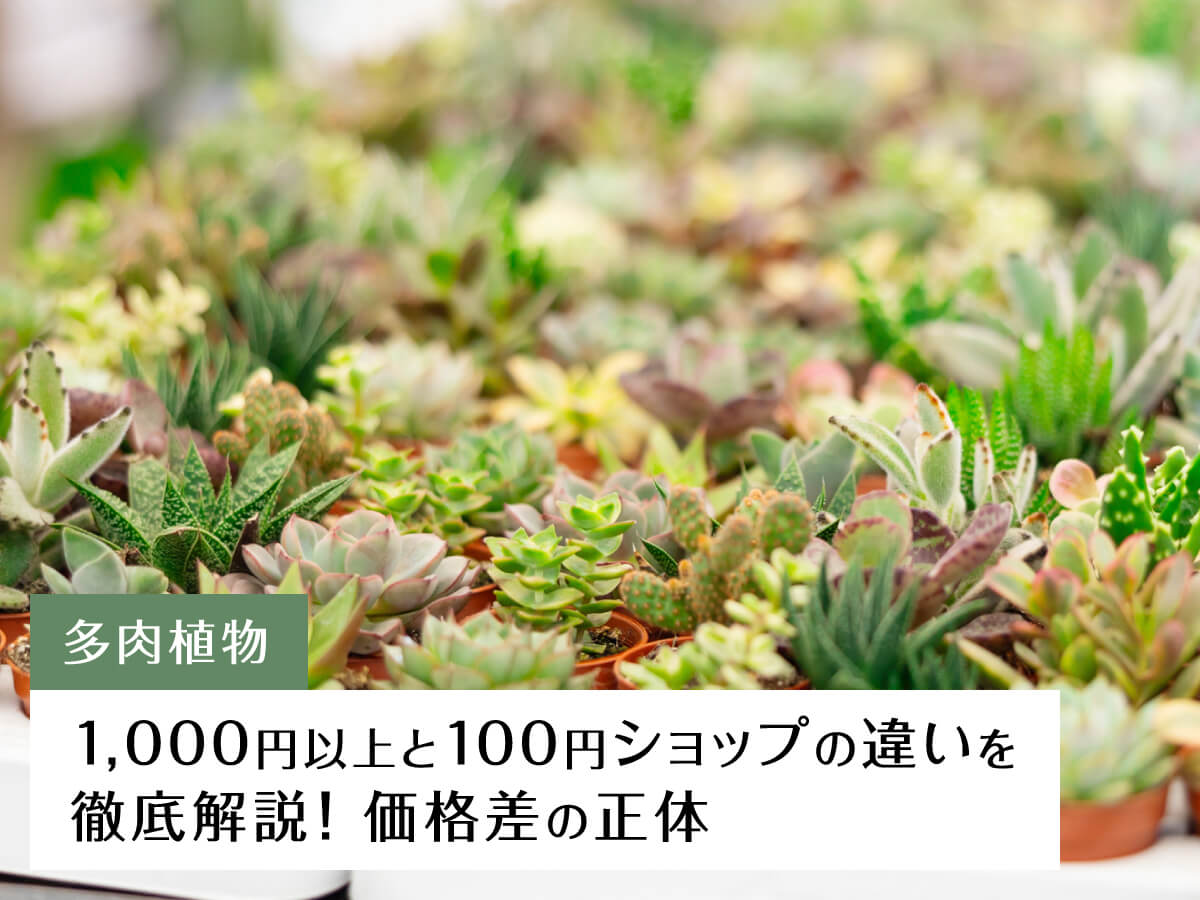
The charm of succulents lies in their diversity and ease of care. Succulents, as their name implies, are plants characterized by thick leaves that store water. They come in a wide variety of types, with abundant appearances, colors, and shapes, and can change their look depending on the season and how they are grown.
Ease of care is also a characteristic, making them beloved by a wide range of people, from beginners to experts. Succulents are highly drought-resistant and can survive even with some neglect in watering. This makes them easy to maintain, and there is also the joy of nurturing them slowly over time.
Furthermore, they can grow sufficiently in small pots, making them easy to enjoy as interior decor. The ability to enjoy them from various angles is truly the appeal of succulents.

3. List of Succulent Names and Types
【Trendy Types】5 Popular Succulents
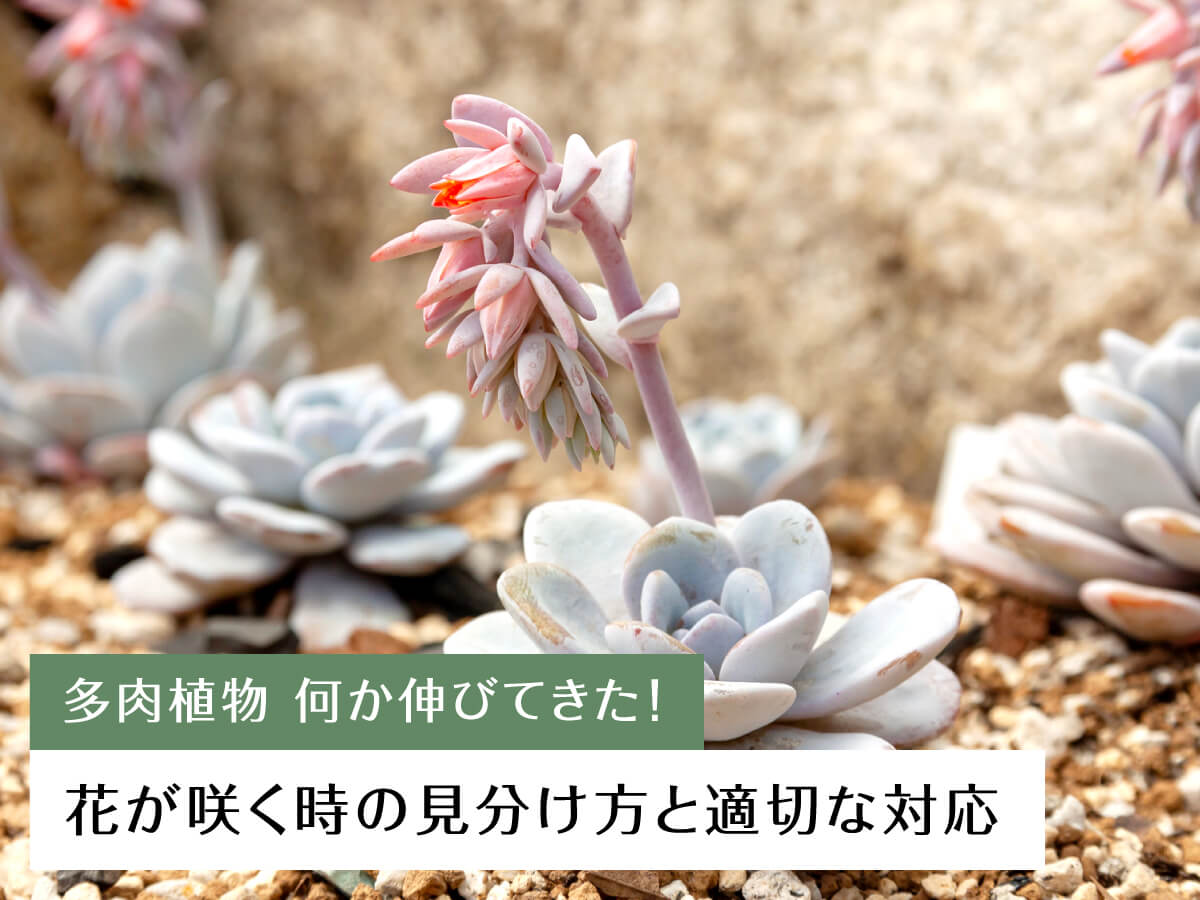
Echeveria
Sedum
Crassula
Kalanchoe
Agave
These succulents are loved by many for their wide variety of colors and shapes, as well as their aesthetic beauty.
【For Beginners】5 Easy-to-Grow Succulents
Graptopetalum
Echeveria
Sedum
Crassula
Cotyledon
These succulents have characteristics that make them easy for beginners to manage, such as watering frequency and sun exposure.
【For Advanced Growers】5 Rare Succulents
Lithops
Adenium
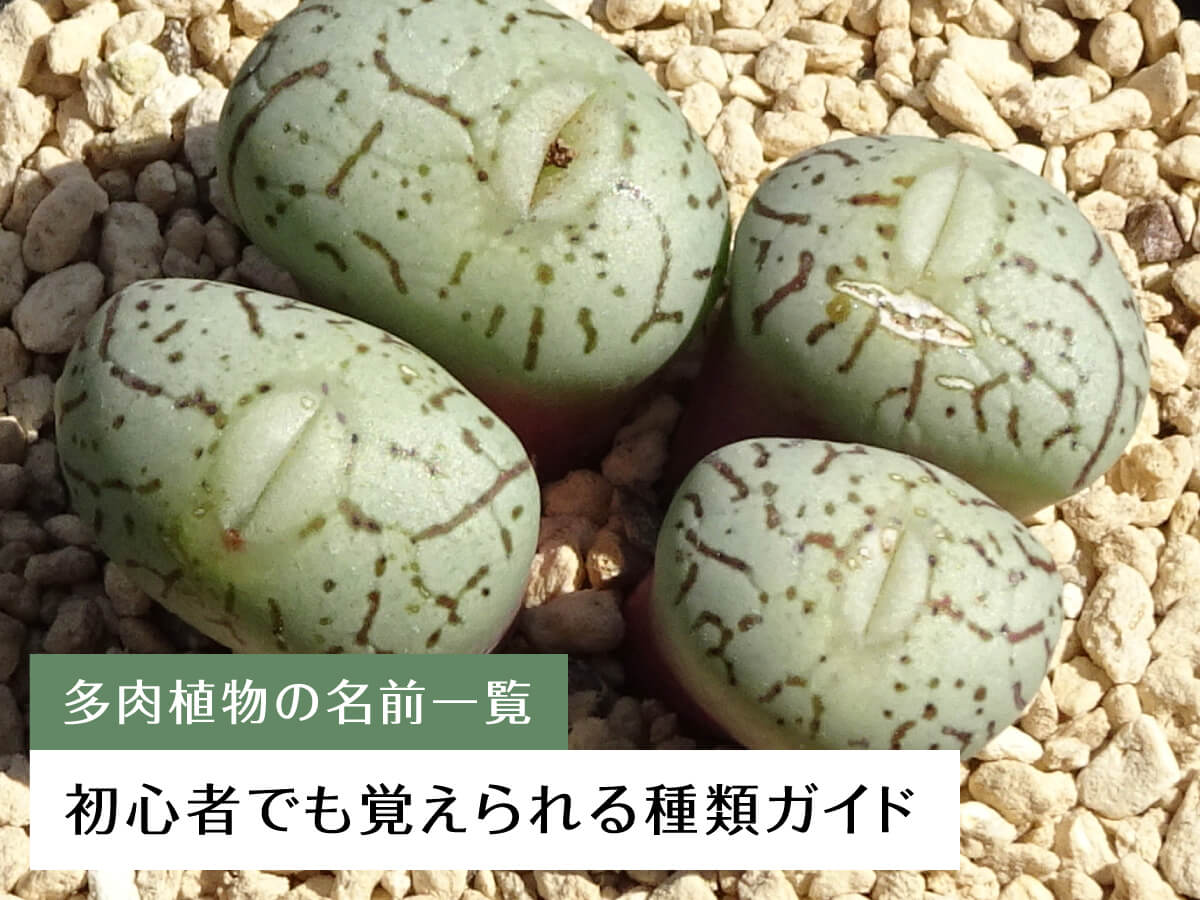
Conophytum
Aeonium
Plectranthus
These succulents are popular among advanced growers due to their unique appearance and reputation for being challenging to cultivate.
(1) 【Trendy Types】5 Popular Succulents
Here are 5 of the most popular succulent types.
- Echeveria: Prized for its beautiful leaf shapes and a wide array of colors. Exposure to sunlight intensifies its vibrant hues.
- Sedum: Cold-hardy and adaptable to the Japanese climate. Some varieties grow along the ground, offering broad coverage.
- Crassula: Many small varieties exist, making them popular for their ease of care. Their diverse shapes and colors make them sought-after collectibles.
- Kalanchoe: Known for long-lasting blooms, making them enjoyable as potted flowers. Their colorful blossoms add a vibrant touch.
- Agave: Also known as American aloe, it's drought-resistant and easy to grow. 'Chinochita' and 'Horrida' are especially recommended for beginners.
These succulents are widely loved by beginners and advanced growers alike for their beauty and ease of care.

(2) 【For Beginners】5 Easy-to-Grow Succulents
Here are 5 succulent varieties recommended for beginners.
Graptopetalum: Many varieties grow on stems, are resistant to heat and cold, and some even thrive in the ground, making them particularly beginner-friendly.
Echeveria: A representative succulent, characterized by its rose-like shape. 'Shichifukujin' and 'Momotaro' are recommended for beginners.
Sedum: A diverse genus. Among them, 'Nijinodama' (Rainbow Orb) and 'Otome Gokoro' (Maiden's Heart), with their elongated stems and plump leaves, are popular.
Crassula: Many small and clumping varieties, as well as stem-forming types. Varieties with star-shaped leaves when viewed from above, such as 'Hoshi no Ouji' (Star Prince) and 'Jujisei' (Cross Star), are popular and collectively known as the "star series."
Cotyledon: Some varieties have leaves covered in tiny, downy hairs or a white powdery coating. Varieties named after animals, such as 'Kumadouji' (Bear's Paw) and 'Tsukitotora' (Moon Rabbit Ear), are also found in this genus.


(3) 【For Advanced Growers】5 Rare Succulents
For advanced growers, we have selected rare succulents for those who have grown tired of common varieties or are looking for new challenges.
Lithops: Characterized by their stone-like appearance. Watering timing is challenging, but their ornamental value is high.
Adenium: Commonly known as desert rose. It has a thick trunk and beautiful flowers. It is heat-tolerant but vulnerable to cold.
Conophytum: Characterized by its plump, round shape. As the plants remain small even after growing, good ventilation is necessary, and care must be taken against cold in winter.
Aeonium: A winter-growing succulent. It is drought-resistant but vulnerable to cold, so caution is needed when temperatures drop below 5°C.
Astrophytum super kabuto: Characterized by its humorous shape. It is difficult to grow, but success will deepen your affection for it.
These are considered advanced due to the higher difficulty in environmental management and care compared to common varieties. The challenge is well worth it.

4. Succulent Types by Characteristic
(1) Search by color: Succulents come in various colors such as green, yellow, red, purple, and blue, depending on the species. For example, within the Aeonium genus, you can choose varieties by color, such as the black-purple 'Kurohoji' (Black Master) or the green 'Meikyo' (Clear Mirror).
(2) Search by shape : Shape is another appealing aspect of succulents. Echeveria are characterized by their rose-like appearance, while Agave species are known for their magnificent forms.
(3) Search by ease of care : Adromischus and Echeveria are considered easy for beginners to grow. Since care instructions vary by season for each type, it's recommended to choose a variety that suits your lifestyle.
Exploring succulents by their characteristics can also be an enjoyable way to find the perfect type for you. Please use this as a reference.

(1) Search by color
Succulents are rich in color, and their aesthetic beauty is one of their charms. The expression of their colors may change depending on where they are grown and the environment. Below are representative succulents listed by color:
【Red】: Echeveria 'Agavoides Romeo Rubin' - Characterized by its vibrant red leaves all year round.
【Yellow】: Sedum 'Tsuki no Ouji (Ogon)' - Turns bright yellow when autumn leaves appear.
【Blue】: Echeveria 'Blue Bird' - Characterized by powder-blue leaves. Edges turn pink during autumn coloration.
These succulents can be chosen according to the location and season based on their color, making them enjoyable as part of your interior decor.

(2) Search by shape
Searching for succulents by shape allows you to find plants that match your preferred aesthetic or space. Here are some particularly popular shapes:
1. "Rosette shape": Echeveria and Graptopetalum, for example, feature beautiful foliage that spreads radially from the center.
2. "Spherical shape": Cacti and Lithops are examples of adorable, round varieties.
3. "Vining type": Senecio and Rhipsalis, for instance, are characterized by long, trailing stems, making them suitable for hanging baskets.
These shapes can also change depending on how they are grown and where they are placed, so choose one that suits your environment.

(3) Search by ease of care
Here are succulent names and types based on "ease of care."
First, there's Echeveria. This variety is popular with beginners due to its beautiful shape and wide range of colors. It prefers sunny locations and well-drained soil.
Next, Kalanchoe. Its vibrant flowers and ease of outdoor cultivation make it a popular choice. You can enjoy its blooms all year round.
Then there's Senecio rowleyanus, or String of Pearls. As the name suggests, it's characterized by its bead-like appearance. It's relatively easy to grow, making it a good choice for beginners.
Finally, Sedum. It grows by creeping along the ground and can adapt to various environments. Its ease of cultivation makes it highly recommended for gardening beginners.
These varieties are easy for beginners to grow, making them ideal as an introduction to succulents.

5. Succulent Care & Uses
The appeal of succulents lies not only in their beautiful appearance but also in their ease of care. Below, we'll briefly introduce basic care methods.
(1) Basic Care: Most succulents thrive in sunny locations. For watering, considering their preference for dry conditions, it's recommended to water thoroughly only when the soil is completely dry.
(2) Seasonal Care: Succulents are categorized into winter-growing and summer-growing types, each requiring different care. Winter-growing succulents have their growth period from autumn to spring, while summer-growing ones grow from spring to autumn. During their growth periods, fertilize them and water them regularly.
(3) Uses in Interior Decor: Succulents, with their unique shapes and colors, can also be used as interior decor. Shade-tolerant succulents can be grown indoors, so placing them by a window or on a shelf as an accent can instantly transform your room into a stylish space.
With these basic care practices, succulents can maintain their beauty for a long time. You'll truly appreciate their charm even more when you grow them yourself.
(1) Basic Care
Here are the basic care instructions for succulents:
1. [Watering] Succulents prefer dry conditions, so overwatering is more problematic than underwatering. Always water thoroughly until water drains from the bottom of the pot, only after the soil has completely dried out.
2. [Sunlight] Most succulents are sun-loving plants, so it's important to grow them in a bright location. However, be careful as strong direct sunlight, especially in summer, can burn their leaves.
3. [Repotting] To prevent root-binding, repot periodically. Spring or autumn is the best time.
4. [Cold Protection] Many succulents are sensitive to cold, so take appropriate measures, such as bringing them indoors during winter.
Keep these points in mind to lovingly care for your succulents.

(2) Seasonal Care
Succulent care varies by season. For summer-growing succulents, spring is the growth period, so provide adequate sunlight and water, and don't forget to fertilize varieties that need it. In summer, avoid high temperatures and humidity, and keep them out of direct sunlight. As plants enter their dormancy period from autumn to winter, reduce watering and, in cold regions, consider moving them indoors.
|
Season |
Care Content |
|---|---|
|
Spring |
Adequate sunlight and watering, fertilize |
|
Summer |
Avoid high temperatures, humidity, and direct sunlight |
|
Autumn ~ Winter |
Reduce watering, move indoors if necessary |
The appropriate seasonal care outlined above is the key to cultivating beautiful succulents. (
(3) Uses in Interior Decor
Succulents, with their diverse shapes and colors, offer a wide range of interior decor possibilities. One method is displaying them in an arrangement. By planting several varieties together in one pot, you can create a wider visual variation. Also, using solidifying soil designed for arrangements allows you to display them in wreaths, on walls, or in other places without being limited by location.
With their beauty and low maintenance, the possibilities for using succulents in interior decor are almost endless. We encourage you to try it out.

6. Summary
In this article, we began with the general characteristics and appeal of succulents, then introduced a list of popular varieties and the names and features of succulents that can be grown by beginners to advanced enthusiasts. We also touched upon key points for finding succulents based on characteristics such as color, shape, and ease of cultivation. Furthermore, we explained basic care methods, seasonal care tips, and ways to use them in interior decor.
Succulents are loved by many not only for their aesthetic appeal but also for their wide variety and ease of care. We hope this article serves as a helpful reference for your succulent journey.