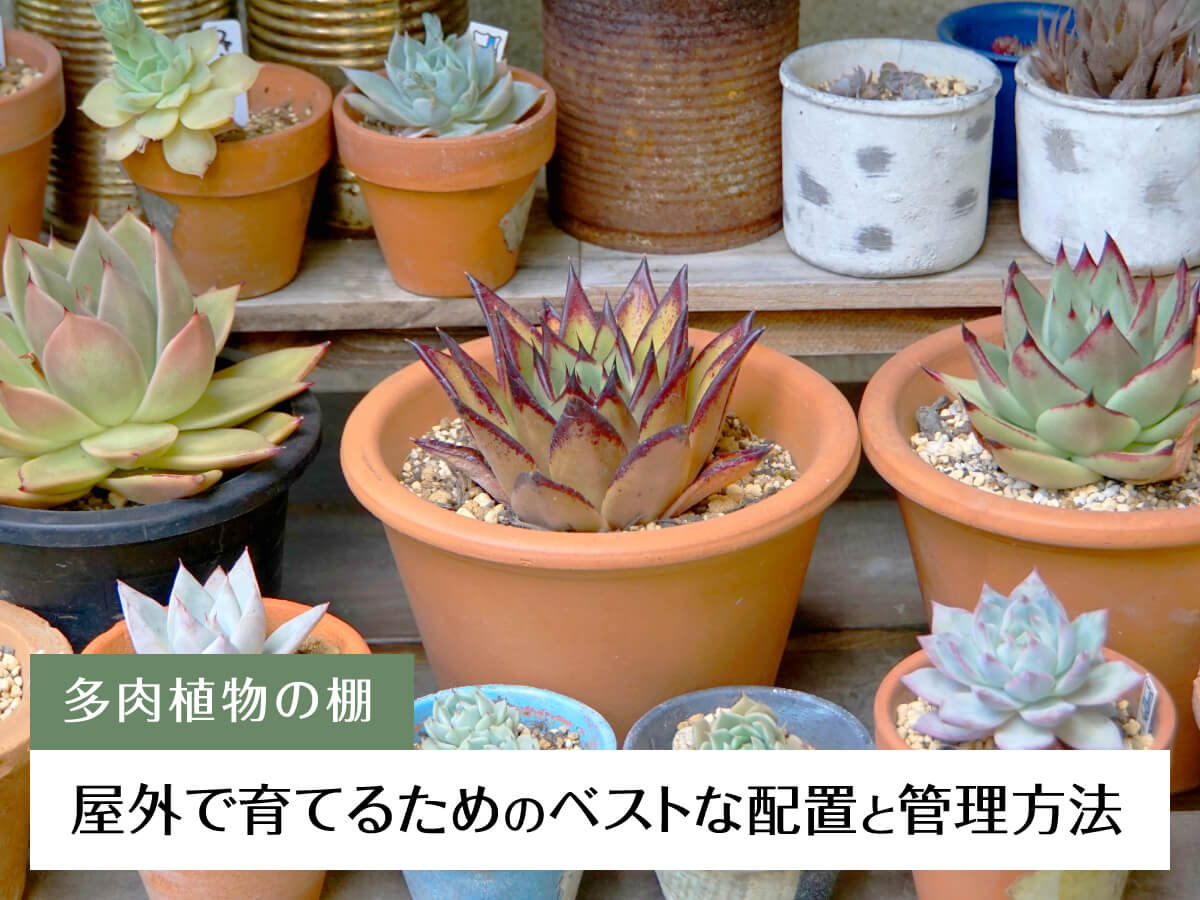
This guide details how to beautifully grow succulents on outdoor shelves. You'll learn how to manage sunlight, ventilation, and visual balance in a way that's easy for beginners to understand.
1. Introduction
For those who are captivated by the charm of succulents and find their desired varieties increasing, but are unsure how to arrange and care for them, this article provides detailed information on how to build a "succulent shelf" that allows you to grow many succulents even in a limited space, its appeal, optimal outdoor placement and care methods, and even recommended varieties. The content is designed to be accessible even for DIY beginners. With proper care, any succulent can reach its full potential. We hope you'll use this guide to create your own succulent paradise.
2. What are Succulents: Simple Characteristics and Charm
The charm of succulents lies in their survival strategy and diverse appearances. Succulents are resilient to drought, a characteristic often referred to as their survival strategy. They store water in their leaves and stems, allowing them to survive even in harsh environments. Furthermore, succulents come in a wide variety of shapes and colors, ranging from small to large. Due to their charming appearance, they are often used as interior decorations (*), and because they are easy to grow, they are recommended for beginners. By arranging them on shelves, you can highlight the appeal of each individual plant while enjoying a unique landscape.
*While often featured as "interior decor" in magazines and interior shops, succulents fundamentally require "sunlight." Although you might often see advice suggesting they're fine by a window or under plant lights, most succulents will etiolate (stretch) or weaken if not exposed to direct sunlight outdoors, so please be aware of this.
Related article here↓
Popular Echeveria Succulents! Introducing Their Types and Characteristics
(1) Drought-Resistant Survival Strategy
Succulents, as their name suggests, possess an amazing survival strategy of adapting to dry environments by storing water in their leaves and stems. This characteristic developed to allow them to survive in harsh, dry natural environments. As a result, compared to general plants, they require significantly less frequent watering, making them easy for even gardening beginners to grow with minimal effort.
Furthermore, this drought-resistant characteristic makes them suitable for shelf cultivation. Especially outdoors, where ventilation is good and maintaining appropriate humidity can be difficult, succulents eliminate this concern. Therefore, succulents can be said to be one of the most suitable plants for outdoor shelf cultivation.
(2) Charming Appearance and Diverse Varieties
One of the charms of succulents is their adorable appearance. Their plump and cute nature, along with their unique shapes and colors, offers visual delight. For example, Echeverias have leaves that spread out in a rosette shape, offering a variety of colors like pink, purple, and deep green.
In addition, succulents come in a vast array of varieties, allowing you to create a space that excites you just by looking at it, by arranging plants of different shapes and colors on the same shelf.
For example, even on a small balcony, by DIYing a succulent shelf, you can create your own succulent world in a limited space.
3. Benefits of Growing Succulents on Shelves
Growing succulents on shelves offers several benefits.
(1) Can cultivate many plants even in limited space: Succulents are relatively small, allowing you to grow numerous plants on a single shelf. By using shelves, you can enjoy many types of succulents even on a narrow balcony or terrace.
(2) Easy to view and manage: Arranging them on shelves allows you to check the condition of all plants at a glance. It becomes easier to grasp specific situations regarding watering and sunlight, saving you effort.
(3) Enjoy a unique landscape: A succulent shelf creates a beautiful display, leveraging their rich colors and shapes. You can create your own original landscape, perhaps by setting a theme for each shelf.

(1) Can cultivate many plants even in limited space
Since succulents can grow well even in small pots, it is possible to arrange and cultivate multiple plants on a single shelf. By taking advantage of this characteristic, you can enjoy many succulents even in a limited space.
For example, by arranging 5 small pots on one shelf and stacking three such shelves, you can grow 15 different types of succulents simultaneously. Furthermore, by adjusting the height and width of the shelves, you can freely change the types and number of plants you grow.
Also, the visual appeal of a succulent shelf is an important factor. By arranging succulents of various shapes and colors, you can create your own unique succulent shelf.
(2) Easy to view and manage
Growing succulents on shelves offers both visual and management benefits. The ease of viewing unique to shelves makes it possible to grasp the condition of plants at a glance, making it easier to notice any abnormalities. For example, changes in leaf color or shape, or the presence of pests, can be intuitively observed.
Additionally, adjusting the height of the shelves allows for careful management without strain. While checking the bottom and watering can be challenging when plants are on the ground, shelves make such tasks smoother.
(3) Enjoy a unique landscape
A succulent shelf not only allows you to observe their growth process at a glance but also functions as an element for creating a beautiful landscape. When the unique shapes and colors characteristic of succulents come together, a highly individual and beautiful scene emerges.
For example, by arranging colorful succulents on a DIY shelf, it's possible to create a scene like a painting. By mixing the characteristics and flavors of each succulent, it provides visual enjoyment.
Furthermore, by creating height differences with shelves, you can achieve a three-dimensional effect. It is important to place each plant in an appropriate position so that it receives sufficient light and grows healthily. This not only enhances visual beauty but also promotes the healthy growth of the plants.
4. Key Points for Arranging Outdoor Succulent Shelves
The placement of succulent shelves not only contributes to a beautiful aesthetic but also significantly impacts the health of the plants. First, regarding "sunlight exposure," succulents tend to prefer sunlight. Therefore, it is recommended to place the shelves in a sunny location. Next is "ventilation." This is also important, as maintaining moderate humidity helps suppress the growth of mold and pests. Finally, "visual balance." By combining succulents of different heights, you can achieve a balanced appearance. Choosing colorful varieties also adds visual enjoyment.

Related articles here↓
Do you know where to place your succulents? The reason why "outdoors" is optimal
(1) Sunlight exposure: Selecting a location that receives appropriate light
Succulents require adequate sunlight for growth. The placement of outdoor shelves must carefully consider this sunlight exposure. While many succulents prefer direct sunlight, prolonged direct sun exposure during intense summer heat can cause sunburn. Therefore, it's important to provide moderate protection from the fierce afternoon sun in summer with shade netting or similar.
Also, the duration of sunlight varies depending on the height of the shelf. Plants at higher positions will receive more sunlight than those at lower positions. Therefore, depending on the succulent species, it can be effective to grow different types of plants on the upper and lower sections of the shelf.
(2) Ventilation: Placement for humidity and pest control
When installing succulent shelves outdoors, ventilation is a crucial factor. This is because succulents do not thrive in overly moist conditions (excessive humidity), and maintaining good airflow helps prevent such conditions. As a practical measure, it is important that the shelves are designed to allow air to pass through easily, and that they are placed in a well-ventilated area. Having shelves in a natural airflow path promotes good ventilation and helps keep humidity down, which is beneficial for the health of succulents.
Furthermore, good ventilation also helps in preventing pests and diseases. High humidity can lead to an increase in pests and diseases, so maintaining moderate airflow to reduce humidity helps with prevention.
If you can only find a place to install them outdoors where there isn't much airflow, it's reassuring to set up an outdoor fan.

(3) Visual balance: Arranging with height and color in mind
When arranging succulents on a shelf, it's not just about placing them in suitable growing locations; visual balance is also important. To create a sense of height, select plants of appropriate heights for each shelf tier and arrange them to create a three-dimensional and appealing display. For example, you might place taller plants on lower shelves and creeping plants on higher shelves.
Color is also an element to consider. Succulents come in a rich variety of colors and shapes, so by grouping similar color tones or, conversely, scattering colors, you can create a space that is enjoyable to behold.
Furthermore, by creating height differences with shelves, you can achieve a three-dimensional effect. It is important to place each plant in an appropriate position so that it receives sufficient light and grows healthily. This not only enhances visual beauty but also promotes the healthy growth of the plants.
5. Succulent Shelf Management Methods
When managing a succulent shelf, particular attention should be paid to watering, fertilizing, and cold protection.
(1) Watering: Succulents are drought-tolerant, so excessive watering can lead to root rot. The basic rule for watering is to water thoroughly after the soil has completely dried. Even then, it's important to refrain from watering on humid days or after rain.
(2) Fertilizing: While succulents don't require much fertilizer, some varieties like Sedum do, and even others can benefit from a small amount of fertilizer during their growing season. It's best to use fertilizer appropriately according to the variety. (*Fertilizer)
(3) Cold protection: Some varieties are sensitive to cold, so it's necessary to move the entire shelf indoors or provide cold protection during winter.
Please enjoy your succulent shelf while adhering to these management methods.
Related articles here↓
"How to Water Succulents" - Expert Tips for Foolproof Watering
(1) Watering: Adjusting the appropriate amount and frequency
When watering succulents, it is important to adjust the appropriate amount and frequency according to their growth condition and the season. Especially for succulents, which are drought-resistant, excessive moisture can actually hinder their growth. As a general rule, it's best to water only after the soil has completely dried out.
Also, seasonal variations in watering are important. It's good to water more frequently during the growing season and less frequently during the dormant season. The目安 is 1-2 times every 1-2 weeks during the growing season, and once every 2 weeks to 1 month during the dormant season.
They are generally drought-tolerant, so it is necessary to be careful about excessive humidity.
(2) Fertilizing: How to fertilize according to the growing season
Fertilizer is essential for the healthy growth of succulents. It's important to manage fertilizer at the right time and in the right amount.
An easy method is to mix slow-release fertilizer into the soil when planting or repotting. If top-dressing, using a fast-acting liquid fertilizer during the growing season is one option. Also, although not fertilizer, liquid plant tonics can be good to use when succulents are not looking vigorous. Plant tonics contain nutrients that may be lacking in fertilizers.
However, refrain from fertilizing during winter when growth is stagnant. Also, be careful not to over-fertilize as it can damage the roots. (*Fertilizer)
*While fertilizing promotes growth, it's generally understood that succulents won't color (like turning pink or red) or will be less likely to color until the fertilizer has worn off. Please keep this in mind if you wish to enjoy the lovely pink-tinged succulents from autumn to winter and spring. Note that coloration varies widely by variety, with some coloring, some not, some turning pinkish, some reddish, etc.
(3) Cold protection: Winter protection methods
Winter management of succulents requires special attention to cold protection. Succulents generally have low cold tolerance, and harsh winter cold can damage the plants.
As a countermeasure, first, placing the shelf near a wall can block the wind. Additionally, covering the perimeter of the shelf with insulating material can reduce cold damage. Insulating materials available at 100-yen shops can also be effective.
Also, in very cold regions, using a small heater is an option, but this should be chosen carefully due to fire risks.
By adapting the environment in this way, succulents can survive the harsh winter.
6. Recommended Succulent Varieties for Outdoor Shelves
For succulents grown outdoors, we recommend varieties that are cold-hardy, change color with sunlight, and grow quickly.
(1) Cold-hardy varieties: These include "Sedum" and "Echeveria." They are strong against winter cold and maintain their beautiful appearance even in harsh environments.
(2) Varieties that change color with sunlight: "Echeveria" and "Graptopetalum" fall into this category. These varieties change color depending on the amount of sunlight, allowing you to enjoy their seasonal expressions.
(3) Fast-growing varieties: "Crassula" and "Sedum" are recommended. These grow quickly, allowing you to create a lush shelf in no time.

Related articles here↓
Succulent Varieties: Sedum! Its Appearance, Characteristics, and How to Grow It, All Revealed!
(1) Varieties with excellent cold hardiness
Succulent varieties that are excellent in cold hardiness and grow robustly outdoors even in winter include "Sedum" and "Echeveria."
-
"Sedum" Sedum species generally have high cold tolerance, with some varieties said to withstand temperatures down to -20 degrees Celsius. Additionally, some varieties change leaf color, allowing you to enjoy their seasonal expressions.
-
"Echeveria" Some Echeveria varieties are relatively cold-hardy and can be grown outdoors even in winter. However, they need protection from snow and frost.
When growing these varieties outdoors, it's advisable to cover the roof part of the shelf with transparent plastic sheets or similar to protect them from rain and snow. Also, choose well-draining soil to help the succulents absorb water easily.
(2) Varieties that change color with sunlight
Among succulents, there are fascinating varieties whose colors change depending on the amount of sunlight they receive. Since these originally grew in harsh environments like deserts, they can withstand a certain degree of strong sunlight, allowing you to enjoy their color variations.
For example, Echeveria varieties tend to blush with strong sunlight, so placing them in a sunny spot will allow you to enjoy their vibrant colors. Also, because their colors change depending on the light conditions, it's possible to express seasonal landscapes on your succulent shelf.
However, some succulents are sensitive to strong direct sunlight, so it is necessary to create a shelf that ensures good ventilation and allows for moderate regulation of sunlight.
(3) Fast-growing varieties
Among succulents, there are also fast-growing varieties. If you want to enjoy visual changes quickly, we recommend varieties like Sedum, Echeveria, and Crassula.
In particular, Sedum's Golden Carpet (Ogon Saibamannengusa) sprouts new growth from its tips and quickly multiplies. This allows you to fill a shelf in a short period, making it easy for even beginners to enjoy creating a succulent shelf.
On the other hand, Echeveria tend to grow large and have attractive, richly colored leaves. From early summer to autumn, they bloom flowers, allowing you to enjoy their changing appearance.
These varieties prefer sunlight and are suitable for growing on outdoor shelves. With proper sunlight and water management, they will grow quickly and beautifully adorn your entire shelf.
7. Summary
In this article, we have explained the key points for setting up succulent shelves outdoors and growing them beautifully. We started by learning about the characteristics and charm of succulents, then delved into the benefits of growing them on shelves, placement tips, and management methods. We also introduced varieties suitable for outdoor cultivation.
The important aspects are managing sunlight exposure, ventilation, and visual balance. Succulents are drought-tolerant organisms, but they still require a certain level of care. Let's learn about proper watering, fertilizing, and winter protection. Based on this knowledge, you can also enjoy creating your own unique succulent shelf.
A wide selection of adorable succulents
Click here for tawawa's online shop↓

Please take a look!