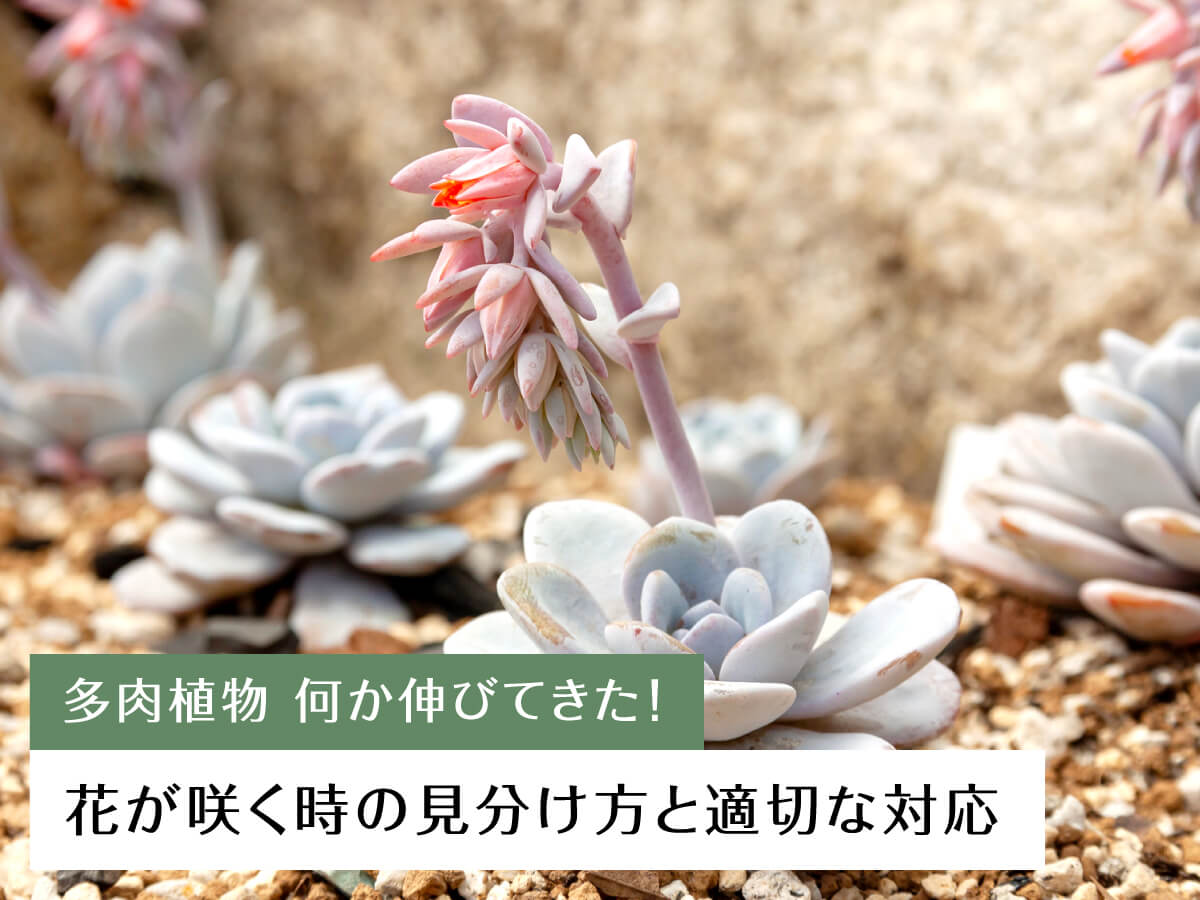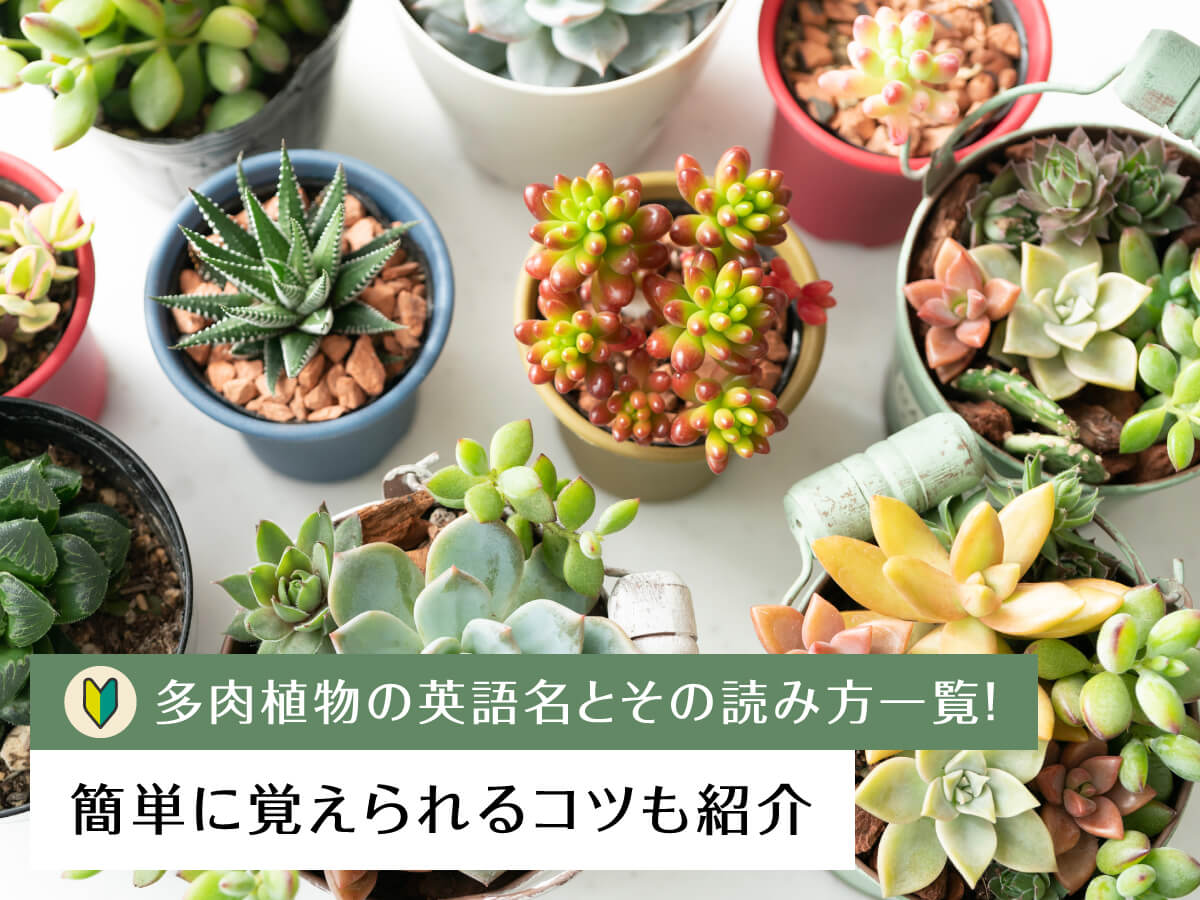
Starting with the appeal and reasons for the popularity of succulent plants, this article explains the common English names "Succulent Plants" and "Succulent," including their pronunciation and meaning. It then lists the English names and pronunciations of five popular succulent varieties and offers tips for efficiently memorizing English names. By making it easy for beginners to learn the English names of succulents, their understanding of these plants will deepen.
1. Introduction
Succulent plants have recently become very popular due to their beautiful appearance and ease of care. They are increasingly seen on social media platforms like Instagram, captivating many with their charm. With diverse shapes and colors, they can instantly brighten up a room when displayed, making them popular for interior decoration.
However, there are many varieties of succulents, each with its unique name. These names are often expressed in English as well as Japanese. Knowing the English names can be helpful for finding extensive information and for communicating with international enthusiasts. This article explains the English names of succulents and their pronunciations, making it easy for beginners to learn them.
(1) The Appeal and Popularity of Succulents
In recent years, succulents have gained immense popularity due to their unique shapes and easy-care nature. These plants have the ability to store water in their leaves and stems, making them highly drought-resistant and requiring infrequent watering. This characteristic is very appealing to busy modern individuals and plant beginners. Furthermore, the wide variety of succulent types is another part of their charm. Their shapes, colors, and sizes are diverse, allowing for the creation of beautiful, painting-like arrangements when multiple types are combined in one pot. Thus, succulents are not only enjoyable to look at but also easy to grow and possess artistic elements, leading to their ever-increasing popularity.

(2) Importance of English Names
The charm of succulents lies not only in their beauty and ease of care but also in their wide variety. In fact, some succulent species and names are more commonly referred to in English than in Japanese. Therefore, to fully appreciate their beauty, it is important to learn their English names.
Additionally, online shops and books dealing with succulents, including imported varieties from overseas, often list them by their English names. Therefore, knowing the English names will be helpful in finding your favorite succulents.
Furthermore, by learning the English names, you can more easily understand the characteristics, growth patterns, and origins of succulents. This is because each name often encapsulates the plant's specific traits. Thus, learning the English names of succulents can help you understand their appeal more deeply.

2. Common Pronunciations and Meanings of Succulent English Names
Succulent plants are called "Succulent Plants" in English. Here, "Succulent" is an adjective meaning "juicy," describing the thick, fleshy leaves and stems of succulents that store abundant water. "Plants" is a noun meaning "vegetation."
On the other hand, "Succulent" alone can also refer to a succulent plant. This is because "Succulent" means "fleshy" or "full of moisture."
Therefore, "Succulent Plants" can literally be interpreted as "plants that store abundant water" or "fleshy plants." Meanwhile, "Succulent" is best interpreted as "fleshy."
(1) Pronunciation and Meaning of "Succulent Plants"
"Succulent Plants" refers to succulents in English, pronounced as "sahk-yuh-luhnt plants." This name is derived from two Latin words: "sucus" (juice) and "lent" (full of). This describes why succulents are drought-resistant, indicating their characteristic of storing abundant water in their fleshy leaves and stems to grow. Understanding this English name allows for a deeper comprehension of the characteristics and ecology of succulent plants.
(2) Pronunciation and Meaning of "Succulent"
The word "Succulent" is commonly used as an English name for what we call "多肉植物" (succulent plants) in Japanese. Its etymology is the Latin word "sucus," meaning "juice." "Succulent" is an adjective meaning "juicy, moist, having succulent tissue." It is also used as a noun, referring to "succulent plants."
In English phonetic notation, it is written as /sˈʌkjʊlənt/, and the American English pronunciation is "sahk-yuh-luhnt." Below is a table summarizing its pronunciation and meaning.
|
English Spelling |
Pronunciation |
Meaning |
|---|---|---|
|
Succulent |
sahk-yuh-luhnt |
Succulent plant |
As shown above, "Succulent" is the English name for succulent plants. Understanding its pronunciation and meaning will contribute to a deeper learning about succulents.
3. List of Popular Succulent English Names and Their Pronunciations
Popular succulents include Echeveria, Aloe, Sedum, Crassula, and Sempervivum. Let's introduce their English names and pronunciations in a list.
Echeveria (eh-kuh-VER-ee-uh): There are many varieties, and their beautiful rosette-shaped leaves are captivating.
Aloe (AL-oh): There are various types, such as Aloe vera and Aloe arborescens.
Sedum (SEE-dum): Varieties like Sedum rubrotinctum and Sedum palmeri are widely popular in Japan.
Crassula (KRASS-yoo-luh): Popular species include Crassula ovata (Jade Plant) and the "Star Series" such as Crassula perforata (String of Buttons).
Sempervivum (sem-per-VEE-vum / sem-per-VAI-vum): Native to the mountainous regions from Europe to Russia, it is highly cold-hardy.
Learning these English names will help you understand the types and characteristics of succulents. Although unfamiliar at first, once you learn them, it will be easier to visualize each succulent.
(1) Echeveria
Echeveria is a type of succulent plant, captivating with its beautiful rosette-shaped leaves. The English name Echeveria comes from the genus name belonging to the family Crassulaceae, order Saxifragales. It is pronounced as "eh-kuh-VER-ee-uh."
Echeveria is characterized by its vibrant colors and beautiful shapes. Since Echeveria is a relatively easy succulent to grow, it is also recommended for beginners.
Below is a table summarizing some Echeveria species and their characteristics.
|
Species |
Characteristics |
|---|---|
|
Echeveria elegans |
Maintains a beautiful rosette shape all year round |
|
Echeveria agavoides |
Characterized by pointed leaves |
Let's continue to learn about various Echeveria to enjoy the world of succulents.
Related articles here↓
Popular Echeveria among succulents! Introducing its types and characteristics

(2) Aloe
Aloe is a type of succulent plant, and its English name is "Aloe." The pronunciation is "AL-oh" (American English) or "AH-loh" (British English). This plant is widely distributed from South Africa to the Arabian Peninsula and is used for medicinal and ornamental purposes.
Furthermore, a major characteristic of aloe is that aloe juice can be extracted from its leaves. This aloe juice is sometimes used as a laxative and is also known for its use in skin care, making it widely recognized. In Japan, it is also known as "rokai" (蘆薈), and this aloe, also known as a Chinese herbal medicine, is loved by many people for its versatility.
(3) Sedum
Sedum, pronounced "SEE-dum" in Japanese, is also sometimes called "benkeisou" or "mannengusa." This is a type of succulent, with over 400-500 species existing worldwide. Most are herbaceous, and some varieties grow into small shrubs.
Sedum is popular as an ornamental plant because some varieties change into vibrant autumn colors in winter. It is also recommended for gardening beginners because it is easy to care for due to its excellent cold and drought resistance.
The English name for Sedum is "Sedum," which comes from the Latin word "Sedere" (to sit). As its name suggests, it is characterized by its growth habit of spreading low to the ground.
This concludes the English name, pronunciation, and characteristics of one type of succulent: "Sedum."
Related articles here↓
Types of succulents, Sedum! Looks, characteristics, and how to grow them all revealed!

(4) Crassula
"Crassula" is a general term for succulents belonging to the Crassulaceae family, and its English pronunciation is "KRASS-yoo-luh." Native to Africa, the "Jade Plant" (officially Crassula ovata), also known as the "money tree," is particularly well-known as a representative species.
Furthermore, "Crassula" is named after the Latin word "crassus," which means "thick" or "fat." This name was given because of its thick, fleshy leaves, which are characteristic of succulents. Understanding the origin of such names might make them easier to remember.

(5) Sempervivum
Sempervivum means "always alive" in Latin. This name was given due to its cold hardiness and vitality.
In Japanese, it is also called "Kumenosu Bandaishou" (蜘蛛巣万代草), meaning "spiderweb perennial grass." This name comes from the way the plant forms offsets and grows in clusters, resembling a spiderweb.
The English pronunciation is "(American English) sem-per-VEE-vum / (British English) sem-per-VAI-vum."
This succulent is known for its beautiful autumn colors, and its diverse coloration, like other succulents, is a major characteristic.

4. Tips for Remembering English Names
To memorize the English names of succulents, there are three key tips:
(1) Learn English and Japanese names together. With so many types of succulents, it can be difficult to learn English names alone. Therefore, we recommend learning them along with their Japanese names. For example, learning "Echeveria" (エケベリア) and "Sedum" (セダム) together will deepen your understanding.
(2) Understand the origin and characteristics of English names. Many plant names are derived from their characteristics or the names of their discoverers. Understanding their origins will make them easier to remember.
(3) Practice pronouncing the English names aloud. Reading English names aloud helps them stick in your memory. If you're unsure about pronunciation, use online pronunciation guides.
Utilize these tips to enjoy learning the English names of succulents.
(1) Learning English and Japanese Names Together
One effective way to learn the English names of succulents is to memorize both their English and Japanese names together. For example, "Aloe" (アロー) is the English pronunciation for "アロエ" in Japanese. Similarly, "Sedum" (シーダム) for "セダム," and "Crassula" (クラッスラ) for "クラッスラ." By pairing the Japanese and English names of succulents, you can reinforce your memory.
Using a table can make it even clearer. Here's an example:
|
Japanese Name |
English Name |
Pronunciation |
|---|---|---|
|
アロエ |
Aloe |
AL-oh |
|
セダム |
Sedum |
SEE-dum |
|
クラッスラ |
Crassula |
KRASS-yoo-luh |
By learning English names, you will deepen your knowledge of succulents and be able to appreciate their charm even more.
(2) Understanding the Origin and Characteristics of English Names
The charm of succulents lies not only in their shape, color, and ease of cultivation, but also in the unique appeal of their English names. Each succulent's English name reflects its characteristics and origin, so knowing the name deepens one's understanding of that succulent.
For example, "Echeveria" is named after the 19th-century Mexican botanist Atanasio Echeverría y Godoy. "Aloe" is said to come either from the Arabic word "alloeh" (meaning bitter substance) or the Greek word "aloē" (meaning salt).
In this way, when learning the English names of succulents, understanding their origin and characteristics can help you feel a greater affinity for the plant. And that becomes a key to memorization.
(3) Practice Pronouncing English Names Aloud
Practicing pronouncing English names aloud is very effective. This is because when learning new words, using both sight and hearing enhances memory retention. For example, for succulent English names like "Echeveria" (エケベリア), "Aloe" (アロエ), "Sedum" (セダム), "Crassula" (クラッスラ), and "Sempervivum" (センペルビウム), first read them silently, then read them aloud.
5. Summary
This article thoroughly explained the English names of succulents and their pronunciations. Specifically, we introduced the English names and pronunciations of popular succulents such as "Succulent Plants," "Echeveria," "Aloe," "Sedum," "Crassula," and "Sempervivum." The term "Succulent" means "fleshy," deriving from their rich water content.
We also provided tips for memorizing English names. It is effective to learn English and Japanese names together, understand the origin and characteristics of English names, and practice pronouncing them aloud. Please utilize these tips to efficiently learn the English names of succulents.
(1) The Importance of English Names for Succulents
Succulents are popular worldwide for their beautiful shapes and wide variety. Therefore, knowing their English names is incredibly useful when searching for information from various countries or researching overseas cultivation methods and varieties. Additionally, some succulent varieties are more commonly referred to by their English names than their Japanese names. Thus, for those who want to fully enjoy succulents or deepen their knowledge, knowing their English names and pronunciations is important. Furthermore, knowing the English names of succulents can also provide clues to understanding the plant's characteristics and origins.
(2) Tips for Efficiently Learning English Names
To effectively learn the English names of succulents, the following three tips are useful:
First, learn the English and Japanese names together. This way, the Japanese and English names are linked in your memory, making them easier to recall. For example, when you hear "Echeveria," you'll immediately associate it with "エケベリア."
Second, understand the origin and characteristics of the English names. Many succulent English names describe their shape, color, or growth characteristics. Knowing their meaning makes it easier to connect them with visual memory.
The third tip is to actually practice pronouncing the English names aloud. By learning the pronunciation and rhythm physically, memories are more likely to stick.
Click here for tawawa's online shop
where you can find many cute succulents↓

Please take a look!