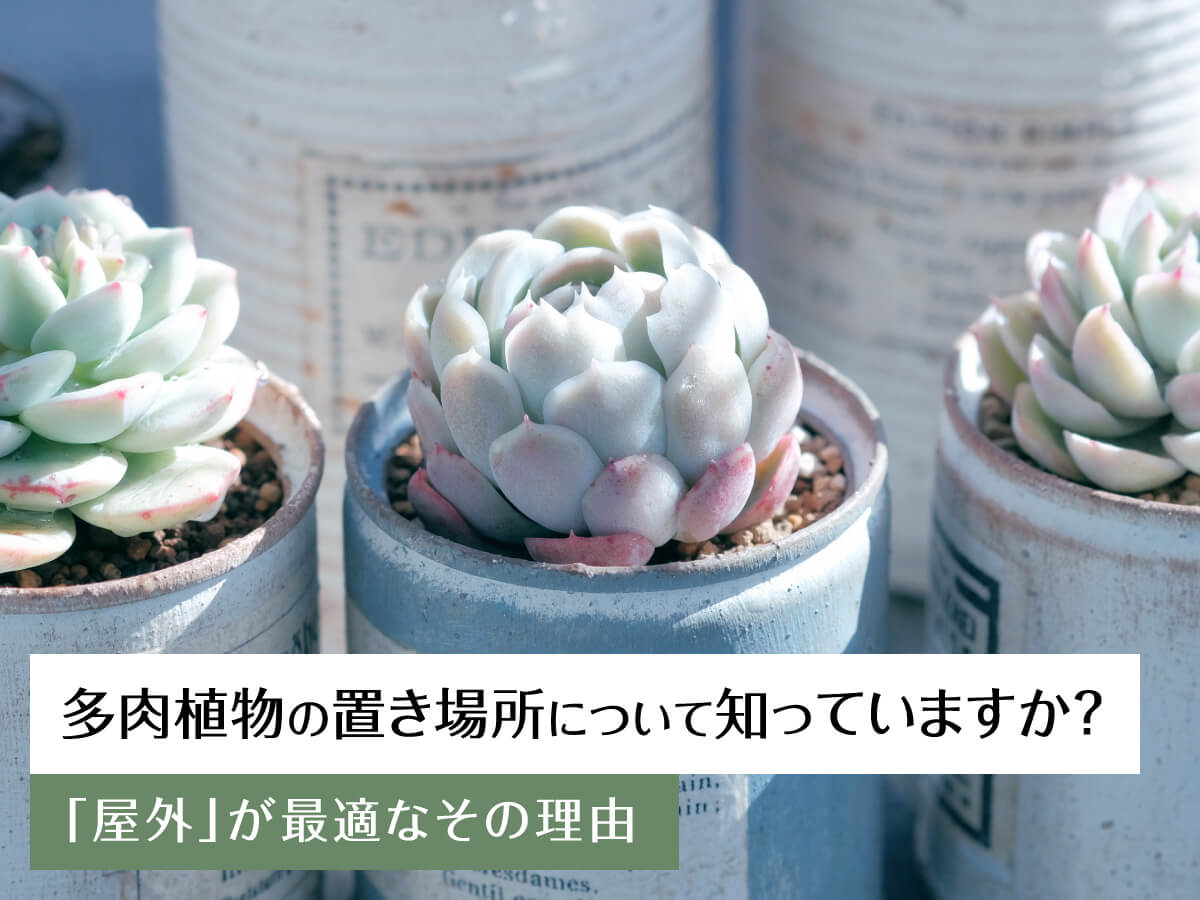
This article discusses the optimal placement for succulents, explaining in detail why outdoors is best. It also covers specific methods for creating the natural environment that succulents need to grow, such as sunlight, air circulation, and temperature.
1. The Importance of Location for Succulents
Succulents are plants with strong vitality that store water in their leaves, stems, and roots, allowing them to grow even in arid regions. Since they thrive naturally in harsh environments like deserts and coastlines, their growing conditions require special attention. For instance, succulents prefer places with ample sunlight and good ventilation, but should be protected from excessive rain. This means that the placement is a crucial factor for the growth of succulents. By choosing the right location, succulents can grow healthily. Therefore, understanding the plant's characteristics and providing a suitable environment is the first step to cultivating beautiful succulents.
(1) Basic Characteristics of Succulents
As their name suggests, succulents are plants whose leaves, stems, and roots are thickened and capable of storing water. Their primary places of origin are arid regions such as southern Africa and South America. The characteristic of succulents, which have evolved to survive in these environments, lies in their thick, water-rich bodies. Some varieties also have spiky or stone-like shapes. Their colors and forms vary widely, and you will be amazed by their rich individuality when you grow them. These characteristics are one reason why succulents have specific demands regarding their placement.

Cacti are also succulents.
(2) Impact of Location on Succulent Growth
The placement has a significant impact on the growth of succulents. In their natural environment, succulents tend to live in areas with abundant sunlight and generally dry conditions. Therefore, choosing a location with sufficient sunlight is a key point.
Additionally, succulents are susceptible to root rot if humidity is high, so a location with good air circulation and appropriate humidity control is ideal.
The table below shows the main factors affecting succulent growth and their ideal environments.
|
Factors Affecting Growth |
Ideal Environment |
|---|---|
|
Amount of Sunlight |
Location with ample sunlight |
|
Humidity |
Well-ventilated location with controllable humidity |
As shown above, by choosing the appropriate location, succulents will grow healthier.
2. Clues from Succulents' Natural Habitats
Succulents grow naturally all over the world, with many species inhabiting arid regions. While some species are native to Japan, many species that thrive in harsh environments can be found in southern Africa, Madagascar, and South America. These environments are basically dry, and succulents store water in their leaves and roots to endure these conditions. Therefore, succulents generally prefer dry environments over humid ones.
(1) Succulent Habitats and Their Characteristics
Succulent habitats are spread across the globe. As a result of adapting to various environments, succulents have developed diverse shapes and characteristics.
Understanding the characteristics of their natural habitats reveals why many succulents are resistant to drought and have the ability to store water in their leaves and roots to withstand harsh conditions. In other words, succulents tend to prefer dry environments, opting for crisp rather than damp conditions.
Understanding these habitat characteristics provides clues for choosing more appropriate locations and care methods for succulents at home.
(2) Ideal Placement Based on Natural Habitats
Considering their natural habitats, the ideal placement for succulents is a "dry environment." Locations with abundant sunlight are also suitable. Specifically, an ideal location receives direct sunlight, has good ventilation, and low humidity. Since such an environment is closer to the outdoors than indoors, it is recommended to "grow them outdoors as much as possible." However, direct sunlight in mid-summer can be too strong, so a bright partial shade is ideal.
3. Outdoors is Best! Succulent Placement and Reasons Why
Succulents often grow naturally in arid regions, so they prefer dry environments over humid ones. Specifically, the crisp outdoor environment is optimal for growing succulents.
(1) Growing Succulents Outdoors
When growing succulents outdoors, a sunny and well-ventilated location is ideal. Also, excessive moisture from rain is not desirable, so measures to prevent direct rain exposure are necessary. Choosing a spot with plenty of sunlight can enhance the color of some varieties.
When planting, using well-draining soil helps with drainage and prevents root rot.
Good air circulation is also necessary, especially when humidity is high, as it can prevent mold and mites. Particular attention is needed during the summer.
(2) Recommended Placement by Season
The placement of succulents also changes with the season.
【Spring and Autumn】 Succulents prefer strong sunlight, so an outdoor sunny spot is recommended for spring and autumn. However, it's best to avoid strong direct sunlight and place them in partial shade.
【Summer】 The strong summer sun is harsh for succulents. Therefore, bright shade is recommended even outdoors.
【Winter】 Succulents are vulnerable to low temperatures in winter, so careful temperature management is required. To avoid frost and cold, it is recommended to bring them indoors or move them to a location where temperature can be controlled.
In cold regions where daytime temperatures are also low, a window sill indoors is ideal. However, since it gets cold in the mornings and evenings, it's best to place them away from the window.
Considering these points, it is important to choose the appropriate placement for succulents according to the season.
(3) Adjustment Methods According to Weather and Environment
When growing succulents outdoors, it is important to pay attention to the effects of weather and environment. The adjustment of sunlight, ventilation, and humidity is particularly crucial. First, regarding sunlight, succulents require sufficient light, but direct sunlight can damage their leaves. Therefore, adjust their position to avoid strong afternoon sun. For ventilation, high humidity environments can lead to mold growth, so choose a well-ventilated spot. However, strong winds can dry out the plant, so maintaining moderate air circulation is important. For humidity, during high humidity periods in summer, it is necessary to improve ventilation or use rain covers to reduce humidity.
4. Recommended Succulents for Outdoor Growing
Recommended succulents suitable for outdoor cultivation include "Echeveria" and "Sedum." These have adapted to harsh natural environments and thus possess the resilience to cope with various outdoor conditions.
Echeveria come in a wide range of sizes, from large growing types to small, charming ones, and are considered easy to grow for beginners. They are cold-hardy, capable of withstanding frost and ice in winter. However, they may rot if they freeze while wet, so protection from rain in winter is necessary.
Sedum, on the other hand, are durable and easy to grow, making them ideal for beginners. They also have high cold and heat resistance, especially strong enough to survive Japanese summers. Therefore, they thrive outdoors even in summer.
As such, Echeveria and Sedum are suitable for outdoor cultivation. However, since their characteristics differ, choose according to your environment.

(1) Varieties and Their Characteristics
Among the "succulents that are easy to grow outdoors," "Echeveria" is particularly recommended. It has a wide range of colors and shapes, and is relatively easy to care for, making it suitable for beginners. A temperature of 5 degrees Celsius or higher and a spot with direct sunlight are optimal. Especially from spring to autumn, it's important to expose them to plenty of sunlight, avoiding shade during the day.
Also, the "Sedum" variety is recommended. It has various sizes of leaves, and many types can be grown outdoors even in winter, allowing you to enjoy their different appearances throughout the seasons. Sedum prefer sunny locations and require good drainage.
Table 1. Characteristics of Succulents Easy to Grow Outdoors
|
Type |
Characteristics |
|---|---|
|
Echeveria |
Wide range of colors and shapes, beginner-friendly, prefers direct sunlight |
|
Sedum |
Various leaf sizes, seasonal appearances, prefers sun and good drainage |

(2) How to Grow Each and Key Points
Succulents have different growing requirements and ideal placements depending on their type. Here, we introduce three types of succulents, their characteristics, and key growing tips.
-
Echeveria: Easy to grow in spring and autumn, recommended for beginners. Best grown outdoors in a sunny spot. Avoid direct sunlight in summer and protect from frost in winter.
-
Agave: A summer-growing type with strong heat and cold resistance. Can be grown in direct sunlight even in summer. Frost protection is needed in winter.
-
Lithops: A winter-growing type, considered for experienced growers as summer management is difficult. Managed outdoors in shade in summer and indoors in a warm place in winter.
The basic principle for growing any succulent is "care during the growing season, leave alone during dormancy." By managing them appropriately according to their characteristics, you can grow beautiful succulents.
🪴Related article: Explaining Succulent Types and How to Care for Them
5. Indoor Succulent Care: Generally to be Avoided, but Tips for When Indoor Growing is Necessary
Succulents primarily originate from arid regions, so humid environments or places without sufficient direct sunlight should be avoided. However, there might be instances where you need to grow them indoors for some reason. Here are a few points to keep in mind.
First, it's crucial to choose a location indoors with as much sunlight as possible. A window sill, where direct sunlight can reach, is ideal. Next, pay attention to humidity. Indoor environments tend to be humid, so it's a good idea to use a dehumidifier, if possible, to keep the air dry.
However, there are also succulents that are relatively easy to grow indoors. For example, Aloe and Sansevieria are said to be relatively easy to grow indoors. Learn the appropriate care methods for each type to support the growth of your succulents.
(1) Difficulties and Precautions for Indoor Growing
Succulents generally prefer locations with plenty of sunlight and good ventilation. Therefore, indoor cultivation can be challenging. The main reason for this is that without sufficient sunlight and airflow indoors, problems like "etiolation" (stretching of stems) and "fading" (loss of color) are prone to occur.
Additionally, especially in summer, there's a risk of succulents weakening due to stuffiness, so caution is needed. If you choose to cultivate indoors, it's important to place them near a window where they get ample sunlight and ensure good ventilation. However, avoid strong direct sunlight in mid-summer.
Nevertheless, with these measures, it is possible to expect a certain level of growth indoors. While meticulous care is required, it allows you to fully enjoy the charm of succulents.
(2) Examples of Succulents Considered Relatively Easy to Grow Indoors
While outdoor cultivation is generally considered optimal for succulents, some varieties can be enjoyed indoors with some ingenuity. One such example is "Echeveria."
Echeveria is a variety that develops leaves in a rosette shape, and its colorful and abundant varieties are attractive. Key care tips include placing it in a bright spot indoors, as it loves sunlight. If there isn't enough light, its shape may become distorted, so it's recommended to rotate the pot regularly or use a grow light. Also, when watering, avoid getting water on the leaves, as water collecting between the leaves can cause rot.
Thus, Echeveria can be considered one of the succulents that can be easily grown indoors.

6. Succulent Care and Post-Care Placement
The placement of succulents after care is very important. Especially after repotting or leaf propagation, succulents in a new environment are greatly affected in their growth.
-
After Repotting: After repotting succulents, they need to rest in partial shade for about two weeks. This allows them time to adapt to the new soil and minimizes damage.
-
After Leaf Propagation: For succulents propagated from leaves, it is recommended to place them in a well-ventilated spot with partial shade until roots emerge. The key is to balance avoiding direct sunlight while still providing some light.
As described above, after caring for succulents, it is important to pay attention to appropriate placement to minimize the impact of changes.

(1) Precautions After Repotting or Leaf Propagation
After repotting or leaf propagation, the placement of succulents is especially crucial. This is because plants are stressed immediately afterwards, and their growth will be hindered if they are not placed in an appropriate environment.
First, after repotting or leaf propagation, it is recommended to place the plants in a well-ventilated area away from direct sunlight for the first 2-3 days. Direct sunlight is too harsh for plants that have not yet rooted.
Afterwards, it is important to gradually acclimate them to sunlight. However, even then, avoid strong midday sun and instead expose them to gentle morning and evening sunlight.
Also, succulents propagated from leaves particularly prefer dryness. Therefore, a less humid outdoor environment is more suitable than indoors where moisture tends to linger. However, during rainy weather, measures such as using a rain cover are necessary.
(2) Ideal Placement After Care
Knowing the appropriate placement for succulents after care significantly impacts their subsequent growth. Especially after repotting or leaf propagation, thorough care is essential.
First, after repotting, place the plant in the shade for about two weeks to allow it to rest. While it acclimates to its new environment, avoid direct sunlight, and a well-ventilated spot is ideal.
Next, after leaf propagation, it is crucial to place it in partial shade with good air circulation until roots emerge. Until the roots are firmly established, it's important to avoid dryness and maintain humidity.
By understanding the appropriate placement and precautions after caring for succulents, you can grow healthy succulents.
7. All About Succulent Placement
Through this article, I hope you have understood that the placement of succulents greatly affects their growth. The optimal location is "outdoors," and this is due to the characteristics of their natural habitat. It's crucial to adjust according to the season and weather, with a sunny and well-ventilated spot being ideal.
However, not all succulents thrive outdoors. For example, some succulents are considered relatively easy to grow indoors. In such cases, choose a spot near a window that receives sunlight.
Also, attention to placement is needed after repotting or leaf propagation. After care, plants tend to be more sensitive to environmental changes, so it's important to allow them to settle.
By choosing the appropriate location, succulents can grow healthily and display their charm to the fullest.
(1) Reconfirming Why Outdoors is the Optimal Placement
Succulents originate from arid regions and possess the ability to grow even in harsh environments. Therefore, to replicate those natural conditions, outdoors is considered the optimal placement. This is because outdoors provides ample sunlight and good air circulation, allowing for the "dry environment" that succulents prefer.
Furthermore, growing them outdoors allows them to respond to natural temperature fluctuations, promoting healthy growth. Therefore, it is recommended to grow them outdoors as much as possible, especially during warmer seasons. However, it is also important to consider indoor management during winter or extreme weather conditions.
(2) Importance of Seasonal and Environmental Management
Seasonal and environmental management is essential for promoting healthy succulent growth. Especially when growing outdoors, weather conditions have a significant impact, and care must be taken regarding rain and wind. Additionally, there is a risk of pests and diseases from the external environment, requiring regular plant checks and prevention. Examples are shown below:
|
Season |
Management Points |
|---|---|
|
Spring |
New shoots emerge. Moderate watering and avoid direct sunlight. |
|
Summer |
Beware of high temperatures and dryness. Water in early morning or evening and manage in shade. |
|
Autumn |
Growing season. Support growth with moderate watering and fertilizer. |
|
Winter |
Some are sensitive to cold, so move indoors during winter. |
By keeping these points in mind, succulents will grow healthily regardless of the season. Proper management is important not only for their appearance but also for maintaining the plant's vitality.
(3) The Appeal of Succulents That Grow Healthily in the Right Location
The appeal of succulents lies in how much their growth is influenced by appropriate placement. Outdoors, in particular, allows them to receive ample natural sunlight, enabling them to exert their inherent strong vitality.
With proper sunlight and ventilation, succulents exhibit beautiful colors and unique shapes. They also develop the strength to withstand harsh environments and grow healthily. These are benefits achieved through appropriate placement, and they are part of the charm of succulents.
Choosing the right location makes succulents even more attractive and enhances their ornamental value. Therefore, selecting the placement for succulents is a crucial factor in maximizing their beauty.
Discover many adorable succulents at
tawawa's online shop here ↓

Please take a look!