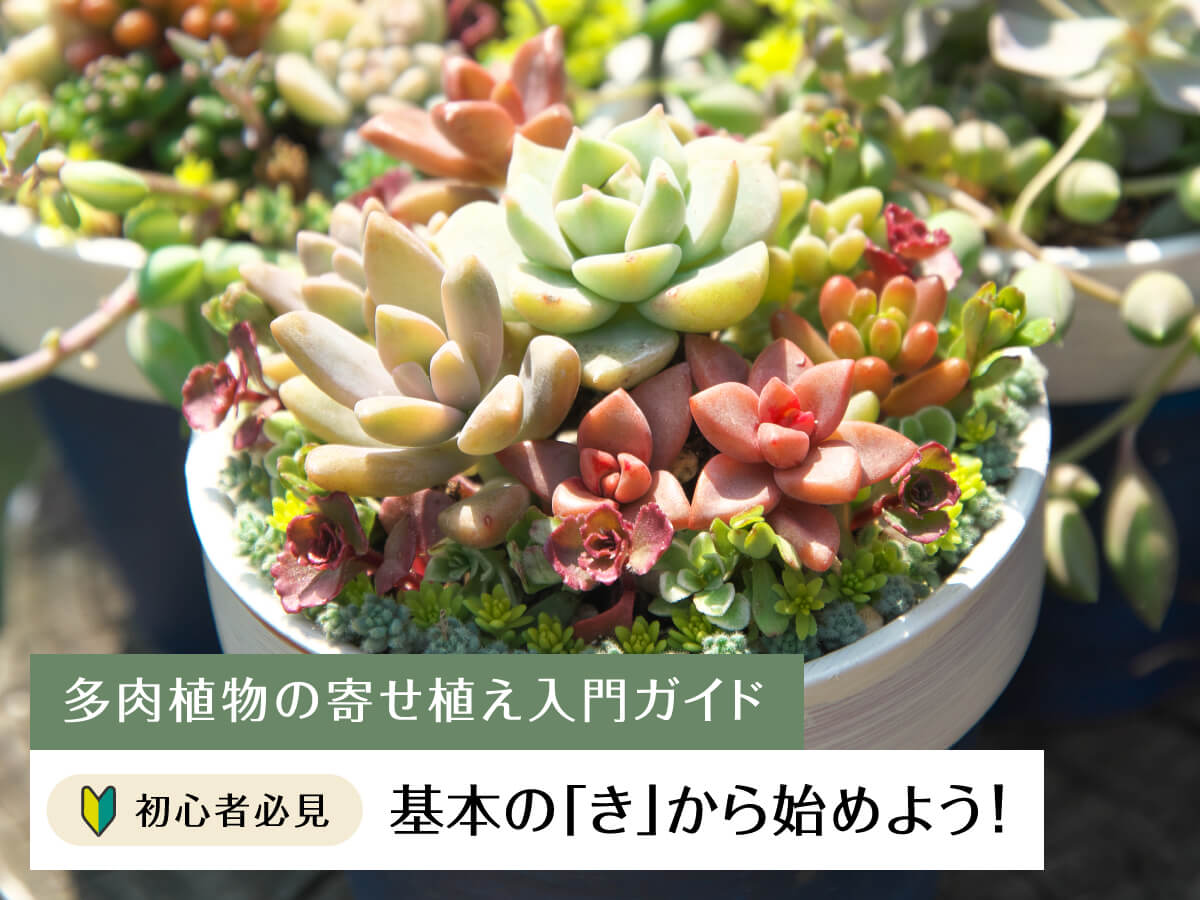
In this article, we will provide a detailed explanation of everything from basic steps to tips and recommended types of succulents for beginners who want to try their hand at succulent arrangements. Let's learn each step carefully and create your very own succulent arrangement.
1. Introduction
Succulent arrangements are widely enjoyed by everyone from gardening beginners to experienced enthusiasts due to their low-maintenance nature and unique charm. However, when trying it for the first time, you might wonder how to approach it. Therefore, this article will clearly explain the basic methods for creating and caring for succulent arrangements, as well as troubleshooting tips. We will also introduce ideas for creating your own original arrangements, so please refer to them. We hope your journey into succulent arrangements will be more enjoyable and fulfilling.
2. What are Succulents?
Succulents, as the name suggests, refer to a general term for plants with "fleshy" leaves and stems. There are over 10,000 species, and their varieties are diverse.
(1) Characteristics of Succulents: The greatest characteristic of succulents is their resistance to drought. The reason for this is their ability to store water in their fleshy leaves and stems. This characteristic allows them to grow with less watering, making them attractive for their ease of care.
(2) Popular Types of Succulents: There are various types of succulents, but "Echeveria," "Sedum," and "Crassula" are particularly popular. Each has different shapes and colors, and combining them increases visual variety, making arrangements even more enjoyable.
Related articles here ↓
Echeveria: A Popular Succulent! Introducing its Varieties and Characteristics
(1) Characteristics of Succulents
Succulents, as their name suggests, are a type of plant characterized by thick, fleshy leaves. These fleshy leaves have the function of storing water, giving them a strong resistance to drought. As a result, if watering frequency is incorrect, root rot can occur, but with proper care, they can maintain their beauty for long periods. Many succulents also prefer sunlight, displaying various colors through photosynthesis. However, some are vulnerable to cold in winter, requiring temperature control. It's important to understand their differing characteristics and provide appropriate care.
(2) Popular Types of Succulents
Succulents offer a wide variety of shapes and colors due to their abundant species. Particularly popular for arrangements are "Echeveria" and "Sedum."
"Echeveria" is a popular succulent. Its beautiful rosette shape and richly colored leaves make it ideal for arrangements.
"Sedum," on the other hand, includes varieties with small clusters of leaves and tree-like forms, which, when combined with Echeveria, further enhance their cuteness.
Keep these types in mind and enjoy creating your own unique arrangements.
Related articles here ↓
Sedum, a type of succulent! Its appearance, characteristics, and growing tips revealed!

3. Tools and Materials Needed for Succulent Arrangements
When attempting a succulent arrangement, you will need a few tools and materials.
First, a pot for planting succulents. Choose one with drainage holes at the bottom for good drainage. This is because succulents prefer a well-drained environment.
Next, the succulents and other plants you'll be planting. Here, choosing plants of different shapes, colors, and sizes will add visual variety and be enjoyable.
Then, the soil for planting. Specifically, prepare well-draining potting soil suitable for succulents, and if necessary, fertilizer to promote growth, depending on your preferred arrangement.
Finally, gather gardening tools such as scissors and a trowel for planting and maintenance.
Gather these tools and materials and try your hand at succulent arrangements!

(1) Key Points for Selection
There are three main key points for selecting the tools and materials needed for succulent arrangements.
First, the pot you use. It is important to choose one with good drainage. Ceramic or plastic pots are common, but one with drainage holes at the bottom for good drainage is ideal.
Second, the soil. Succulents prefer well-draining soil. It is good to use commercially available cactus soil or a blend of akadama soil mixed with perlite.
Third, how to choose succulents. Since arrangements involve planting multiple succulents together, it is easier to manage if you choose varieties that prefer similar environmental conditions. At the same time, combining plants with different shapes and colors can also be visually enjoyable. These are the basic points for selecting tools and materials for creating arrangements.
Related articles here ↓
[Choosing Soil for Succulents] Beginners won't fail! How to make easy-to-grow soil?
(2) Usage Examples and Their Effects
The basic tools and materials needed for an arrangement include succulent seedlings, a pot for the arrangement, appropriate soil, pot drainage stones, tweezers or chopsticks, scissors, a trowel, and a watering can. All of these are essential for the success of your arrangement.
For example, the pot determines the overall visual of the arrangement, so choose its shape, material, and size according to your preferences and interior decor. The soil needs to promote root growth and be well-draining. Pot drainage stones play an important role in facilitating water drainage and preventing root rot.
Tweezers or chopsticks are used to handle delicate succulents without damaging them during planting. Scissors are used to trim plants as needed or remove diseased parts. A trowel is used to put soil into the pot or to dig soil when necessary.
By properly using these tools and materials, you can create a healthy and beautiful succulent arrangement.

4. Basic Steps for Creating a Succulent Arrangement
Succulent arrangements are easy and fun to create. First, put an appropriate amount of potting soil into the container you'll be using for the arrangement. Next, plant the succulents in the soil. Arranging them offers the unique pleasure of succulents, with their variety of colors and shapes. Try to find your favorite combinations. You can create a large, natural-looking arrangement by leaving some space between the succulents, or a compact arrangement by placing them closer together, enjoying various styles of arrangements.
Post-arrangement care is particularly important. Do not water immediately after arranging; wait 1-2 days. This helps the plants adapt to their new environment.
It may seem difficult at first, but with a few attempts, you'll be able to enjoy creating your own original arrangements.
(1) Preparation Before Arranging
Preparation is necessary before you start arranging. First, choose the succulents you will use. For beginners, sturdy and easy-to-grow varieties are recommended.
Next, choose a pot suitable for succulent arrangements. Unglazed terracotta pots with good drainage are recommended. It's important that the pot has drainage holes at the bottom to prevent excess water from accumulating.
Also, the soil is important. Succulents prefer well-draining soil. Specialized succulent soil or a blend of perlite and akadama soil is ideal. These provide good drainage and prevent root rot.
Finally, before starting, gather all your tools and materials and secure your workspace. With that, your arrangement preparation is complete.

(2) Arrangement Tips and Achieving Balance
In succulent arrangements, the balance of placement greatly affects the overall appearance. Firstly, planting from the center makes it easier to achieve overall balance. Also, when using colorful succulents, the arrangement of colors is important. Try to distribute each type evenly to avoid a uniform color scheme and maintain color balance. Furthermore, planting them diagonally will result in a plump shape, creating a visually appealing arrangement. Here, try to enjoy arranging them to your liking and according to the environment of their placement.
(3) Post-Completion Care Instructions
Once your succulent arrangement is complete, it requires proper care. First, choosing the right location is important; succulents love light, so choose a sunny spot. However, avoid direct sunlight in midsummer, and an bright, semi-shady location is ideal.
Watering should be done after checking the dryness of the soil. Water thoroughly until it drains from the bottom of the pot to prevent root rot. Be especially careful during the rainy season to summer, and do not water until the soil is completely dry.
Also, if necessary, apply fertilizer periodically. For compact arrangements, applying fertilizer might cause the arrangement to lose its shape, so it's better not to use fertilizer to enjoy the arrangement for longer. Please decide based on the type of arrangement and how you want to grow it. If you do use fertilizer, spring to autumn is the growing season, so apply fertilizer at an appropriate frequency during this period to provide nutrients.
By continuing this care, you can enjoy your beautiful arrangement for a long time.
Related articles here ↓
Do you know about the ideal location for succulents? The reason why "outdoors" is optimal
5. Stylish Succulent Arrangement Ideas
For succulent arrangements, choosing the right container or pot is crucial. In particular, the idea of painting baking molds or unglazed pots with acrylic paint allows you to enjoy a unique, one-of-a-kind original arrangement.
Also, combining succulents of different colors and shapes creates a more attractive arrangement. While an arrangement of the same species is beautiful, combining different species can highlight their individual characteristics.
Furthermore, seasonal or themed arrangements are also fun. For example, a Lithops arrangement can create a unique atmosphere reminiscent of a "jewelry box."
As described above, by being creative with your choice of containers and succulent combinations, you can create your own stylish succulent arrangement.

(1) Change the Atmosphere by Choosing Containers and Pots
Choosing the right container or pot greatly influences the atmosphere of your arrangement. First, for succulents, choose a container with drainage holes to prevent root rot by allowing excess water to drain. Next, regarding materials, while various options like ceramic, plastic, wooden boxes, and glass exist, ceramic is recommended for its good breathability and high moisture retention.
The size of the pot is also important. Each plant needs enough space to grow independently. At the same time, it's crucial to consider the balance between the overall pot and the plants.
Just by changing the color, shape, or pattern, the overall atmosphere can change dramatically. Changing pots with the seasons to reflect seasonality is also one way to enjoy it. Try various pots to suit your preferences.
Related articles here ↓
What are the 5 points to avoid failure when choosing succulent pots? Detailed explanation from selection to arrangement
(2) Try Combining Succulents of Different Colors and Shapes
The true joy of succulent arrangements lies in combining plants of various colors and shapes to create a unique landscape. For example, Echeveria has a flower-like shape and offers a wide range of colors from green to purple. In contrast, Sedum has small, dense leaves and is characterized by a compact, elongated shape.
The key to arranging is considering the balance of colors and shapes. First, choose one main plant and arrange it in the center. Then, select supporting plants that enhance the main one and arrange them while observing the overall balance. By combining plants with different colors and shapes, you can create an arrangement with depth and a three-dimensional feel.
Arranging is about expressing your own sensibility and enjoying it freely. Try creating your own unique succulent arrangement.
(3) Arrangement Ideas Based on Season and Theme
Seasonal succulent arrangements allow you to enjoy decorating your garden or indoor space all year round. Especially in spring, when new life sprouts, choosing succulents in pastel colors like pink or white can create a bright, spring-like atmosphere.
Also, themed arrangements are a fun idea. For example, if you choose "Desert Oasis" as your theme, you can recreate a desert landscape by using succulent varieties that thrive in deserts and adding stones.
When creating an arrangement, not only the placement and color scheme of the plants but also choosing them according to the season and theme is one of the joys. Use these tips to create your own original arrangement.

6. Management and Cultivation of Succulent Arrangements
The management and cultivation of succulent arrangements require an appropriate location, proper watering methods and frequency, and seasonal care including overwintering.
(1) Location and Environment: Succulents generally prefer sunlight, but prolonged direct exposure can cause scorching. It is recommended to place them in a bright location for at least half a day.
(2) Watering Method and Frequency: Succulents are drought-resistant, but they will stop growing if they lack water. The basic rule is to water thoroughly when the soil dries out.
(3) Overwintering and Seasonal Care: Winter cold is a major enemy for succulents. Manage them indoors, or if placed outdoors on a balcony, take measures to protect them from frost. Spring to autumn is the growing season, so promote healthy growth by providing appropriate fertilizer as needed.
Related articles here ↓
[Beginners Must See] How to Grow Succulents Well? Basic Care Made Easy
(1) Location and Environment
In the management of succulent arrangements, location and environment are crucial factors. Succulents originally inhabit arid regions, so they prefer a dry environment. Proper sunlight and ventilation are particularly important.
Specifically, it is ideal to place them in a sunny location. An outdoor spot with direct sunlight is desirable. However, direct sunlight in midsummer can be too strong for succulents, so it is necessary to avoid strong afternoon sun and move them to a shaded area.
Also, while the amount of sunlight is generally insufficient for growing indoors, if you live in a cold region, you might grow them indoors during winter. In such cases, it is important to choose a sunny location and ensure good ventilation. High humidity, in particular, can cause root rot, so make sure to keep the environment dry.
Related articles here ↓
Why is it difficult to grow succulents indoors? The reasons and tips to overcome them
(2) Watering Method and Frequency
Watering succulents requires the right method and frequency. Basically, when the surface of the soil is dry, water thoroughly until it drains from the bottom of the pot. Generally, during the growing season, watering once every 1 to 2 weeks is ideal, and once or twice a month during dormant periods like winter or summer. However, the frequency needs to be adjusted based on the location and temperature.
Succulents are vulnerable to overwatering, so it's important to water thoroughly until it drains from the bottom of the pot, and then let it completely dry out before the next watering. Also, the best time to water is in the morning or evening; avoid watering during the hot midday hours as it can lead to increased evaporation.
Related articles here ↓
"How to Water Succulents" without Failure? Expert Tips for Watering
(3) Overwintering and Seasonal Care
Overwintering and seasonal care for succulents are performed based on an understanding of their individual characteristics and environment. In winter, in particular, it is important to reduce watering frequency to prevent damage from the cold. By withholding water, the concentration within the plant increases, which helps prevent freezing. For varieties sensitive to cold, it may be necessary to stop watering completely and protect them indoors.
|
Season |
Watering |
Repotting |
|---|---|---|
|
Spring (March-May) |
More |
OK |
|
Summer (June-August) |
Less |
NO |
|
Autumn (September-November) |
Moderate |
OK |
|
Winter (December-February) |
Modest |
NO |
With proper seasonal care, you can enjoy beautiful succulent arrangements for a long time.
7. Troubles and their Solutions
Troubles are sometimes unavoidable when enjoying succulent arrangements. Here are some solutions that may be helpful in such cases.
(1) What to do when leaves fall off: It is common for succulent leaves to fall off. Place the fallen leaves lightly on the soil. Once roots emerge, begin watering. This may allow new succulents to grow.
(2) What to do when succulents have stretched: If succulents have stretched, pruning is necessary to restore their original shape. Cut the stretched parts, and if you insert them into the soil, new roots will emerge and they will grow as new seedlings. This way, it is possible to restore them to their original state.
(1) How to deal with detached leaves
When a succulent leaf falls off, you don't necessarily have to throw it away. In fact, it's possible to grow new succulents from detached leaves. This method is called "leaf propagation," and while the speed of growth varies by season, leaf propagation can generally be done year-round.
There are various methods for leaf propagation, but it's fine to either place the detached leaf directly on the soil or to let it dry and wait for roots or buds to appear before placing it on the soil. Enjoy it in your preferred style.
In this way, even when a succulent leaf falls off, there is a chance to cultivate new life. Please try this method when leaves fall off.
Related articles here ↓
"Succulents" Propagate with Leaf Cuttings! Tips and Procedures to Avoid Failure
(2) How to deal with stretched succulents
When succulents have stretched, the main way to deal with it is "pruning." By cutting the stretched parts and replanting them as cuttings, it's possible to restore them to a healthy state.
-
First, cut the stretched part with clean scissors. The cutting position should be between the leaves, in other words, at the "node."
-
From here on, similar to leaf propagation, it's fine to either insert the freshly cut part directly into the soil or to let the cut part dry in the shade for 2-3 days before inserting it into the soil. Drying is said to protect the wound and prevent decay.
-
After planting as a cutting in the soil, some people water immediately, while others refrain. Both are generally fine, but please water considering the type of plant, and whether the plant has roots or not. After that, water when the soil dries out.
This method is a common approach to a phenomenon called "etiolation." Etiolation is when plants stretch excessively towards a light source, which can disrupt the overall balance of the plant and cause it to lose vigor. Through appropriate pruning and propagation by cuttings, it's possible to maintain a beautiful shape.
Related articles here ↓
【Succulent Etiolation】Causes and Effective Reshaping Methods Explained
8. How to enjoy succulent arrangements
Succulent arrangements offer the joy of creating your own original work. When making an arrangement yourself, first choose your favorite succulents, then arrange them considering their characteristics, colors, and shapes. You can create a miniature garden style, or a monochrome style by planting only one type together; you are free to enjoy it with your own ideas.
Succulent arrangements also make excellent interior decorations. By arranging them in a wreath shape and hanging them on a wall, or by arranging them in a wall-green style, you can change the atmosphere of your room. Designs that incorporate seasonal elements or arrangements that match a theme are also enjoyable.
Succulent arrangements are a way to create your own space, and they are also a soothing item that calms the mind. Please do try to create your own original arrangement.
(1) Create your own succulent arrangement with DIY
The joy of creating your own succulent arrangement through DIY is exceptional. You gain an attachment to each plant and a sense of accomplishment that pre-made products cannot offer. First, select the type, shape, and color of succulents you want to use. Next, prepare pots or containers that will showcase them.
The basic arrangement is to place larger plants in the center and smaller plants around them, but feel free to experiment with your own ideas. For example, placing taller succulents at the back and rosette-shaped ones at the front can create a sense of depth.
Once planted, water thoroughly and your arrangement is complete. Your unique succulent arrangement can also be enjoyed as room decor. Don't neglect regular watering and sun exposure, and cultivate it with love.
(2) Incorporate into your interior with wreath or wall green arrangements
Succulent arrangements are not only beautiful but can also be enjoyed as a DIY project. Wreath and wall green arrangements, in particular, are popular as stylish interior decorations. A wreath, with delicate succulents arranged in a circle and hung at the entrance or in a sunny spot, creates a space that feels natural all year round. A wall green, where succulents are arranged across an entire wall, acts as a three-dimensional green accent and becomes part of the interior. In both cases, by creatively choosing succulent varieties and their placement, you can create your own original work. Succulent arrangements can add color to any space, so please give them a try.
9. Summary
Succulent arrangements are popular for their diversity and beauty. This article has explained in detail what succulents are, the tools and materials needed for arrangements, basic arrangement methods, as well as ideas, care methods, and troubleshooting.
We also introduced ways to enjoy succulent arrangements, such as creating your own original arrangements and using wreath or wall-green style arrangements for interior decor. Based on this information, why not try your hand at succulent arrangements?
Please refer to this guide, which you can reread anytime, for your succulent arrangement life.
Many cute succulents are available at
tawawa's online shop here ↓

Please take a look!